Showing posts with label politics. Show all posts

Tuesday, April 11, 2017

Uniting Behind Pragmatic, Local Policymaking

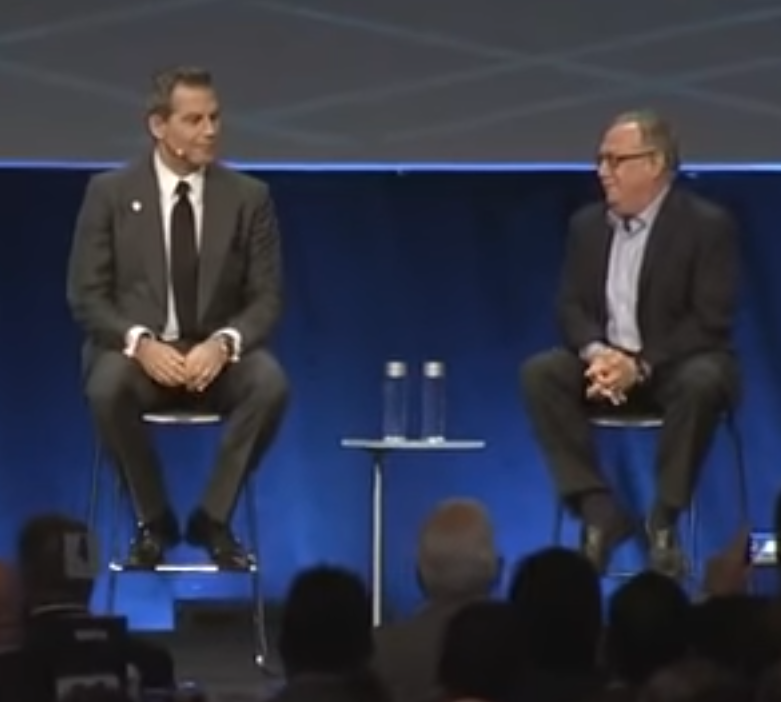
Richard Florida (left) and Joel Kotkin at a recent joint appearance.
When Joel Kotkin and Richard Florida can pen an article together.  It's time to notice.


It's a must-read.

The message is summed up in the piece:
The issue isn't just the dysfunction of our national government, but how we can best and most efficiently address our economic needs and challenges.  The United States is a geographically varied place.  No top-down, one-size-fits-all set of politics can address the very different conditions that prevail among communities.
They cite the need for pragmatic local policy making as the key to getting America reunited.

Right on.

Tuesday, April 14, 2015

Boosting Ohio Suburbs: Suburbs Boosting Ohio

Site Selection magazine illustrates Ohio's #2 place
He didn't make the cover, but he got a pretty neat illustration souvenir nonetheless.  Governor John Kasich can thank Ohio's suburbs for his win in 2014.

I'm not talking about last year's reelection win.  I'm talking about Ohio's #2 slot in the annual race to win the Governor's Cup from Site Selection magazine.  The article A League of Their Own tells the 2014 story of economic development success around the country.  Ohio has a pretty good story again this year too.

As is my custom, I have analyzed the win.  I'm boosting suburbs, with facts.  Bottom line: Again this year in Ohio, it's a story about Ohio's suburbs boosting Ohio.

Here's the conclusions:

  • Manufacturing continues to prove it is alive and thriving in Ohio.  52% of the projects on the Site Selection list were manufacturing projects.  In fact, 62% of the 21 projects with $50 million or greater investments were big manufacturing projects.  Clearly, the majority of Governor Kasich's economic development success is owed to Ohio manufacturing.  
  • Suburbs are where manufacturing goes with 95% of Ohio's manufacturing projects happening in Ohio's smaller cities and suburbs.  Ohio's three C's (Cleveland, Columbus, and Cincinnati) combined for 15 manufacturing projects in 2014 out of 257 statewide.  That means the other 242 came from Ohio's smaller cities, suburbs, and exurbs.
  • Suburbs accounted for 74% of all of the projects that brought Ohio second place on the coveted list.  That matches the high percentage for the last seven years of which the total has never dropped below two thirds.
  • Licking County garnered 3 of the 21 largest capital investment projects in 2014, more than any other county.  Licking County is a suburban county.

Ohio's economy depends on the strength of its suburbs.  

I can't help but think back to my blog in 2012 to sum up why this matters.  Density and bigness are not in the recipe for economic development success.  Ohio's economic strength is in her suburbs.


---------------------------------------------------------------
More Background:

My research is not all that hard to do.  One can quickly look at the 2015 version of the "Ohio Private Investment Survey" report by Ohio's DSA to glean the stats.

At 95% for 2014, the manufacturing percentage for the suburbs and exurbs stat reconfirms a trend.  It was 94%, 93%, and 94% in 2013, 2012, and 2011 respectively.

Here's seven years of analysis of the percentage of overall projects on the Site Selection list that come from outside of Ohio's three most urban counties:

2014: 74%
2013: 72%
2012: 74%
2011: 68%
2010: 71%
2009: 73%
2008: 74%

Here's links to my 2013 and 2012 columns on this subject.

Tuesday, September 23, 2014

Embrace Suburbs, Or Lose


Joel Kotkin is feeding both political parties with some fact-based thoughts on suburbs.  His latest piece, "Why Suburbia Irks Some Conservatives," clearly has a longer-term purpose than just a one-time tweak.  It's just in time for the 2016 election.

He's right to do so.  The last presidential election was decided on suburbs vs. urban areas, with the dividing line being in "swing" suburbs like Newark, Ohio.

Which party will carve out this territory? 

Kotkin begs the question when he writes:
"Yet, there remains a great opportunity for either party that will appeal to, and appreciate, the suburban base. Conservative figures such as Ronald Reagan and Margaret Thatcher understood the connection between democracy and property ownership and upward mobility. Much the same could be said for traditional Democrats, from Roosevelt and Harry Truman, all the way to Bill Clinton."


Let me tie this back to Ohio.

Suburbs are increasingly becoming independent places with their own identity and their own mix of culture and economy.  Newark, Ohio sits at the center of a suburban place with 44 miles of bike paths, three universities, a science museum, and a performing arts center that brings in national acts.

Suburbs are where manufacturing is located.  If Ohio remains the swing state it has been, manufacturing will be a buzz word again.  You can still find manufacturing workers and companies in the suburbs.

Suburbs are the next generation's home. Kotkin has, repeatedly, defied the conventional wisdom with facts.  The millennial generation, increasingly becoming an economic and voter force, has a greater overall desire to live in the suburbs than their parents' generation.  Newark is Ohio's 20th largest city and one of only two in the Top 20 that is growing.


Ignore the suburbs at your own risk.  That's Kotkin's early message and theme.

Thursday, July 10, 2014

The Number One Thing To Do at the Cleveland Republican Convention

Bury the term Rust Belt.  That's the number one thing I would do at the Republican Convention in Cleveland in the Summer of 2016.

Ohio would have already been at the height of still another "swing state" presidential election and seen millions of negative television ads.  The national media will re-link again and again ad nauseum the term Rust Belt with Ohio.

Cleveland should defy the expectations of visitors who have been pre-conditioned to expect a rusty, ugly place.

So, prepare for burial.


Right there at Erie Street Cemetery across from Progressive Field should be a burial plot set aside to bury the term forever.

Wednesday, April 30, 2014

Cleveland Brain Gain Explained


Today, Cleveland.com features the work of the Cleveland "Rust Belt Chic" guy, Richey Piiparinen, and Jim Russell under the title "Unexpected Brain Gain Boosts Cleveland Toward New Economy, Study Finds."

The upbeat story puts on its ear those who paint Cleveland as a population sinkhole in a death spiral.

And the piece cites a pretty interesting fact that caught my attention.

The 2010 Census greatly favored cities with big universities to be seen as population-growing, educated locations.

Indeed, anecdotally, I know that the takers of the 2010 Census were extremely aggressive about counting college students where they went to college rather than their permanent address with their family.  My then-college-housed daughter would have gotten counted at her college if I hadn't aggressively intervened and coached her to shoo off the Census hounds who were stalking her dorm's hallways to add to their numbers.

I tend to think there were some politics in that Census approach, but that's another topic.  One of the impacts of counting college kids where they go to school rather than where they make their permanent address is to give cities with big universities a boost in population and educational attainment.

It's a false boost for those cities and a false drain for others.  The impact is negative on older cities with no big university.  Those places' population, by comparison, are older and less educated.

What Piiparinen and Russell's study points out that it is more proper to measure working age population and newcomers to that group as a measure of the demographic ups and downs of a place rather than the conventional measures that come from the Census.

They're right.

Here's hoping the story isn't just a one-time blip in the Cleveland narrative.  There are real reasons to be more upbeat than meets the eye.

Friday, April 18, 2014

Knowing What We Know About Ohio's Suburbs. . .

. . . we need to keep investing in success of Ohio's suburbs. 


Ohio's top ranking in Site Selection magazine showed Ohio's economy is dependent on its suburbs and smaller cities.  My analysis of the state-produced report on private investment in 2013, showed 94% of manufacturing projects were outside of the Ohio's largest three cities. 

This is nothing new.  Consistently, this has been the case.  The number was 93% in 2012.  It was 95% in 2011 and 92% in 2010.

Yet, state policy makers tend to hear more from the big cities.  They may, even, scoff at the idea that Ohio's success is so tied to its suburbs.

The noise favors the cities.  There are whole lobbyist groups that are set up to fight for a bigger piece of the pie for cities.  They go after development incentive programs, capital dollars, and policies that are designed to shift favor to the big city clients at the expense of the suburbs.

The suburbs have only the facts on their side.

It's not us vs. them, cities vs. suburbs that should rule the day.  The pattern is clear:  When Ohio invests in the success of its suburbs, all of Ohio gains.

Tuesday, April 8, 2014

Swing State Fail


It's not 2012 anymore.  Ohio's election-year "swing state" status is two years behind us and, likely, two years ahead of us.

It's time to ponder, again, whether this whole "swing state" thing is really worth it.  I recently learned of yet another reason why that "swing state" status doesn't really work in our favor.

At a recent Columbus2020 panel on data analytics, it was revealed that IBM was compelled to delay announcing their monumental decision to bring their new data analytics project to Ohio in the Fall of 2012.

The reason they were compelled to delay the sharing of the decision?  The election.

It wasn't to steal any one candidates' thunder.  It was to avoid being made a political football by announcing good news in Ohio too close to election day.

Word came out, officially, after the election.

How many things get delayed, postponed, or halted just because of our "swing state" status?  One is too many.

Tuesday, January 28, 2014

State of The Union: Buzz Words Watch List


"China is no longer the world’s number one place to invest; America is."  That's a great line and sounds like one from an economic development sales guy.  But, after all, that's one of the jobs of the President in a global economy.

This is my annual analysis of the State of the Union Address of the President.

For the first few minutes of the 2014 State of the Union Address of President Obama, I thought I was listening to a summary of Joel Kotkin's writings or, even, some of the points long-made in this blog about policies that take advantage of America's advantages.

Then, I heard even more policy statements with a great ring to them:
  • Tax reform that makes onshoring of manufacturing easier
  • Infrastructure investments that prepare for the future
  • Energy independence that includes natural gas, including incentives for CNG fueling stations
  • Business-sought immigration reform
  • A STEM education focus
  • Workforce training reforms
Count me a skeptic though about these platitudes.  These may be more gestures than actions.  Time will tell.

It's too bad this wasn't the speech at the start of 2013 instead.  Regrettably, election years are not the years when these policies get done.

I counted one mention of Ohio (actually Youngstown) and five mentions of the word manufacturing, a pace that does not match his re-election year shout outs to the State and the industry sector, but still ranks higher than his early years in office.

Cathy McMorris Rodgers' Republican address had just one manufacturing reference.  Skills training and immigration reform had good rings to them though.  I wish she had focused on this topic to find common ground and to help elevate this issue to the agenda.

In the end, this was an event that can't expect to have made much difference going forward.  I hope I'm wrong.

Thursday, December 12, 2013

An Amazing Show of Pragmatism

I steer clear of the partisan side of politics in this blog, but I couldn't not share this.

PolicyMic, a website I can't recall anything about before, posted some images of the Obamas, Clintons, and Bushes mixing it up on Air Force One and in South Africa as part of the recent Nelson Mandela ceremony.

This is a must-see collage of pragmatism on display. 

These people spent millions fighting each other and still do look for reasons to deliver political knocks, but they can laugh together and sit near each other.  PolicyMic's conclusion might alarm a few people, but it might also be right.  It concluded, "Conservative and liberal politicians spend more time together, and have more in common with one another, than we’d like to believe."

See "8 Photos You Didn't See From Obama's Trip to South Africa."

Thursday, December 5, 2013

Christmas Countdown: More Family Ornaments

My family Christmas tree isn't going to win any beauty contest.  Admittedly, it's a hodge podge.  And we love it!


I have ornaments, both hand-made and store bought, adorning the tree.  Some of them my kids made.  Some, I made as a kid.

Every ornament has a story.  Here's the story on a few more family ornaments.

This one my mom bought me to remind me of a memory.  She went with me to the fireworks on the Mall in D.C. in 1987 when I was a Congressional intern.  This one has lights and sounds of fireworks, though the bulb plug-in doesn't fit the modern lights I have now.

While we are on D.C.. . .

My mom made this one.  Brynley put it at the heart of the tree.  Yes, it's a heart.

This one was made by the glass artists at our local science and art museum, The Works.

There's some sort of game associated with this pickle.  I've forgotten the rules though.

Thursday, October 17, 2013

It Starts Here

 
It Starts Here was a program put on by the Ohio Manufacturers' Association in concert with the Ohio Chamber and the Ohio Steel Council.  It was my pleasure to attend an event where nearly everyone sings from the same songbook and shares a vision for the U.S. with a revitalized manufacturing sector.  Sometimes you just have to do that.
 
 
The forum was a place for Dan DiMicco, Chairman of Nucor Corporation (the steel guys), to share his strong message on the fight to get manufacturing back to the 20-to-30% of GDP that it once was in our country.  Since we are at 10% now, getting back to 20% of GDP is an ambitious goal.  However, DiMicco makes the point that investing in infrastructure, gaining energy independence, and enforcing free trade laws are the pillars of an approach that would create 25 million new jobs in the U.S. if achieved.
 
You're not likely to read about it anywhere else, so I'll share a few key points.
 
On rhetoric without action.  DiMicco takes on those politicians who talk about manufacturing but, then, don't act on it with policy changes that help manufacturing compete.  He's no "free trade" advocate if it doesn't come with fair trade implementation.
 
On the skills gap.  DiMicco labels his colleagues that complain about the skills gap in the U.S. negative thinkers.  He challenged the manufacturers in the room to get involved in making sure the labor pool is there for their future growth. He doesn't see it as just the government's job to solve this issue.
 
On energy independence.  He cited the shale plays as bringing a growing gap between the cost of energy in the U.S. versus those costs in Germany, Japan, China, and other countries.  Clearly, DiMicco advocates that export of our natural gas resources is a recipe for giving up our competitive edge.
 
On technology replacing jobs.  Asked to answer the idea that technology is to blame for the loss of jobs, DiMicco said that technology may mean it takes less people to produce the same number of products.  However, he challenged that growth comes from "seizing the productivity gains to grow the business and jobs."  That's how jobs get created.
 
On the barriers to a national manufacturing policy.  Asked to explain how some may label the call for a national manufacturing policy to be "socialistic" or government picking winners and losers, DiMicco remarked that such a policy would be for all of manufacturing not one sector over another sector.  He reminded the questioner that other countries have figured out that a strong national manufacturing policy is the key to growing their economies.
 
On the story behind the story.  For my part, I made a beeline for DiMicco afterward and urged his greater acquaintance with Joel Kotkin's research linking the demographics behind the story.  I hope he does.  His story is compelling and could be enhanced with the facts that Kotkin provides to back it up.
 
It starts here.
 
DiMicco ended with a showing of the Nucor video titled "It Starts Here."  See it below.
 

Wednesday, March 20, 2013

D.C. Day By The Numbers


Eight hours in to our day when this photo was taken, we still hadn't seen a soul from Capitol Hill.

Yet, by the time we were headed back, we had seen all 16 Ohio Congressional District offices, the White House, and both Ohio Senator's offices. Three members of Congress--Pat Tiberi, Steve Stivers, and Bill Johnson--personally took the time to listen and engage in a productive dialog with our contingent.

And what a contingent it was!

40 community leaders from among elected officials and business people joined in a chorus of support for the Aerospace Center. Combined those leaders committed over 900 man hours to telling our story.

Impressive numbers. Impressive day.

Thursday, February 28, 2013

Will Calibrate For Food: On The Eve of Sequestration


It made me laugh, but it also made me think. On a recent tour of one of our defense contractor customer's labs, a sign was up that read, "Will Calibrate For Food."

The talented technician, whose skills see him calibrate high tech equipment to mind-boggling small tolerances, was looking for some comic relief to the stress of the federal government's crisis du jour--Defense Sequestration. He fears for his job.

This guy calibrates equipment that helps ensure a missile fired goes down the warlord's chimney instead of hitting the wedding party. One mistake in his calibration can cost thousands times his salary and countless more diplomatically and personally.  An investment in calibration of weapon systems is an essential part of owning weapon systems.

And that's the problem with sequestration. Its not that there are cuts, its just that there is no real thought behind the cuts. That's what makes no sense. Revenue-producing programs get cut. There is no regard for talent, need, or anything of value when a machete is used to cut budgets instead of a paring knife.

Yet, his considerable talents aren't really needed by people who don't buy missiles and weapons every day.  Thus, the humor of picturing a person standing on a street corner with such a sign.

Here's hoping I don't see this sign at Hebron Road and Irving Wick anytime soon, though.

Tuesday, February 12, 2013

POTUS SOTU 2013

My observations from watching the State of the Union tonight:


MANUFACTURING
I heard manufacturing mentioned more times than I expected. This small, symbolic word count gesture matters. Seven mentions is better than none.

The talk of a generic policy to support manufacturing got one of a very few bipartisan standing ovations. That's a positive sign too.

Actions? It's time for a national manufacturing policy.


INFRASTRUCTURE
$50 billion for highway funding may sound good on the surface, but "fix it first" is a phrase that, at least in Ohio, has meant to exclude economy-expanding, capacity-growing suburban highway projects. The nation needs a balance of infrastructure projects dealing with maintenance alongside those in areas where growth can be accommodated and facilitated. "Grow it too" should be the added catch phrase.


ENERGY EFFICIENCY
Energy efficiency was one of the buzz phrases too. However, the federal government should not be involved in setting standards for private, commercial buildings' energy efficiency. These policies and programs, even in private hands, tend to be urban-biased, i.e. LEED certifications. I don't trust that federally-led ones would be less so.


TECHNICAL EDUCATION
STEM education efforts to match high school education with business needs was good bully pulpit language. A challenge put to keep college costs down certainly has a nice ring to it too.

Monday, January 21, 2013

Uh Oh, No "M" Word


I multi-tasked while I watched and listened to President Obama's second inaugural address today on my iPad at the office.

I didn't hear the "M" word.

Not sure that I hadn't missed it, I found a full text of the speech on AP and searched it.  Yep, no "M" word.

Where was manufacturing?

After hearing the word so many times in his last State of the Union Address and finding the topic so often brought up during the Presidential campaign, especially in manufacturing-oriented Ohio, I was certain the "M" word would be prominent on this day where the agenda is set for the next four years.

The fact that it wasn't has me saying, "Uh oh!"

Let's hope actions speak louder than words.

Friday, January 4, 2013

Acknowledging a Memorable Quote


Just re-elected Speaker of the House John Boehner had a quote in his remarks yesterday:  "We are sent here not to be something, but to do something."

That's a great line.

Monday, December 31, 2012

Don't Fret The Cliff


If the "Fiscal Cliff" doesn't get solved today, don't fret. The Treasury Secretary can publish notices to hold tax rates at certain levels pending future Congressional action.

This can get dealt with later with few consequences. That's, frankly, why the sense of urgency of Members to act isn't there.

The fall off the "cliff" can feel like a stumble.

Monday, November 26, 2012

Kotkin: Honest Abe in 2016!


Joel Kotkin combined thoughts of Abe Lincoln, on many minds because of the movie that's out, with more thoughts on the outcome of the recent Presidential election.

His Off The Rails piece, as pretty much all his pieces, is a must-read. 

Republicans' best chance for appealing to a broader base in 2016 is in following the lead from its first candidate:  Abe Lincoln.

Kotkin understands that demographics drive the train.  A pragmatic, growth agenda can have appeal.

"By admitting that government is sometimes a necessary partner in nurturing and sometimes financing infrastructure critical for economic expansion, Republicans can offer their own vision of what growth-inducing services such as new roads—as opposed to the increased regulation and transfer payments and pension bloat peddled by Democrats—government can and should provide."

Monday, November 12, 2012

Life In A Swing Ward


Remarking, and gesturing too, at the Eisenhower Office Building's Indian Treaty Room.

"For the sake of our economic future as a nation, keep making manufacturing a top, national issue after the election." I punctuated my point to White House officials at in August adding, "Tell them you heard it from a guy who lives in a Swing Ward, in a Swing City, in a Swing State." And I wasn't exaggerating.

With precinct-level results now in and reported on by The Advocate, I'm proven right. Shockingly, right.

Ohio was close and, until we change our way of allocating electoral college electors, remains a Swing State.

Newark was 50-48 Romney. Romney visited Newark. Obama didn't. Plus, the auto bailout was a non-issue in Licking County. Swing City.


Then, there's my ward. The Fourth Ward is a bellwether indeed. Newark's Fourth Ward was won by Romney by a mere 68 votes--1,393 for the Republican challengers and 1,325 for the Democrat incumbents. Swing Ward.
Will the White House listen?

Sunday, November 11, 2012

Sunday Column Routine


My Sunday routine always includes reading Joe Hallett's Columbus Dispatch column. His ideology is hard to nail down. Democrats probably think he's a Republican and Republicans assume he's not one of them. I'm not sure they aren't, somehow, both wrong. It doesn't matter, though, I read for the pragmatism.

Today's column hit his ever-pragmatic tone again. The political status quo is not particularly promising, particularly if one believes that there are some real issues that need pragmatically resolved, and soon.

His conclusion should draw pragmatists to read the whole thing: "We — you and me — allowed this to happen. We have enabled the gerrymandering that has eliminated competitive general elections and rendered a Congress full of granite-headed extremists. We have allowed special interests to buy our representatives by doing nothing to correct a corrupt campaign-finance system."