Showing posts with label energy. Show all posts

Saturday, October 3, 2026

Three Thoughts: Energy Cost Surge Invites Energy Sector Accountability


The Ohio Manufacturers' Association 2026 Energy Conference saw record attendance and earned headlines for tackling tough energy issues and preparing industry leaders to understand the coming trends.  Canary Media reported on forecasts driving up Ohio power bills, and The Columbus Dispatch reported on the PORTS-Pike project slated to be built in Southern Ohio. 

One theme ran throughout the day: accountability.  

Accountability is done for someone, not to someone.  That’s a phrase I’ve always used.  It applies to big organizations too, not just people.  

Accountability is a good thing. 

Energy costs are being watched by many people these days, especially by manufacturers.  

I had three top takeaways beyond the headlines.  

First Thought: Keep an eye on electricity forecasts

Keynote speaker Dr. Jon Koomey of Koomey Analytics said people historically have tended to overstate the impact of new technology and cautioned that growth in data computing use doesn't necessarily imply electricity demand growth.  Electricity load forecasts have caused an inflated sense of future power demands and have tended to impact current prices. Though data centers have been seemingly made to blame, the real issue may be unaccountable projections. 

Panelist Kim Bojko indicated the widely-reported 30,000 MW projection from AEP for Central Ohio has now been modified down to 5,700 MW.  The over 80% drop has garnered little attention. 

We all need to keep an eye on these numbers and challenge assumptions. Brad Belden of manufacturer Belden Brick said, "Customers writing the checks better be there (at the discussion table) too." 

Another Thought: Need to return policy focus to electricity customers

Ohio loses if we lose focus on the manufacturing base of our economy. Industry needs affordable energy to create jobs. Ohio Manufacturers’ Association’s Lindsay Short said, "Reliable and affordable energy is a long strength in Ohio." 

The conference included a panel that proves Ohioans are at the forefront of this vital, national issue.  Two Ohio members of Congress, both House Energy and Commerce Committee members, spoke to the gathering.  

Congressman Bob Latta who chairs the Subcommittee on Energy said about electricity pricing to the room full of manufacturers, "If [electricity is] not affordable, you can't compete."  

Congressman Troy Balderson who chairs the House Energy Action Team added, "We need to lower costs for manufacturers who are providing jobs." 

It’s clear that a focus on electric customers is crucial. 

Third Thought: What does the future hold?

Dr. Koomey said, "No one knows what A.I. electricity needs will truly be. Efficiency and shift in demand are coming." 

Koomey wasn’t the only one looking into his crystal ball at the future of energy issues. 

A panel talked about microgrids.  Microgrid is a new phrase entering the energy sector. It's a phrase used as a counterpart to "behind the meter" and speaks to power generation for a single user. However, it's really an old phrase that means a community providing electricity from a single power source to multiple users. Could microgrids of our past be in our future?  Time will tell. 

The bottom line is this.  Whatever the future may hold, keeping a critical eye on electricity forecasts and focusing policies on electricity customers is the key to accountability for the energy sector.

----------------------------------------------

This column is a regular column in The Columbus Dispatch.


Saturday, June 20, 2026

Three Thoughts: Nothing Mundane About Energy Production


Mundane.  An over $4 per gallon price of gasoline aside, stopping to fill your car’s gas tank seems fairly routine.

Learn what goes into making gasoline and producing power, however, and there’s nothing mundane about it.  There’s so much more complexity, and economic impact, than meets the eye. 

Ohio is at the center of it all. 

First Thought: Tour an Oil Refinery. Learn Its Complexity.  Cenovus’ Lima oil refinery is nearly two hours away from Columbus.  Yet, our routine ability to pull up to a gas pump and fill up in Central Ohio is owed to this plant and three others in Ohio. 

I was glad to get a tour recently and learn more.  What an eye opener. 

There’s so much complexity.  Yet, it would be easy to be dismissive about the 140-year-old refinery which is the oldest continually operating refinery in the United States.  Out of sight.  Out of mind. 

It’s not out of mind in Lima.  In fact, facing a possible closure a few years back, the city rallied to find a buyer and keep the jobs and economic impact.  It’s good for all of us they did. 

It takes a lot of STEM-skilled people to keep it operating efficiently and make the jump between refining crude oil into gasoline, diesel, or jet fuel. 

Another Thought: Supply Chains Are Also Complex. It is shocking how much supply chain impact there is.  It’s a list too long to write down.  

Pipelines push out the fuels across the state.  Terminals miles away on the pipelines fill the trucks that keep our gas stations pumping.  Marathon runs a major terminal in Central Ohio. 

Railroad lines bring critical materials in and out.  Every manufacturer and rail user benefits from spreading the costs of keeping the lines running across a wide industry base. 

MPW, MISTRAS Group, Kokosing Industrial, and AMG Vanadium are among the companies that employ people in the middle of Ohio but with strong ties to the refineries and Ohio’s energy industry. 

Third Thought: Other Forms of Energy Also Not Mundane.  Increased electricity use, coupled with lost electricity production, has made the business of power generation something that used to be out of sight and out of mind, but isn’t anymore.  

However, now there is new power generation capacity planned galore.  The PJM multi-state grid operator just accepted 811 applications for interconnection from generators of all types.  Supply is coming. 

The vast number of PJM applications and ones that hit the agenda at the Ohio Power Siting Board show a growing trend.  A good one.  Power generation is finding its way to where the users are.  

It could still be out of sight and out of mind. For example, The Ohio State University’s Combined Heat and Power Plant is hidden in plain sight.   Power can be generated in a building that’s visible right off State Route 315 on campus.  One could drive by it and never know.  OSU has found a way to make power generation feel, well, mundane. 

We all need to embrace the more visible, complex energy production business.  We all benefit.  After all, there’s nothing mundane about energy production.


----------------------------------------------------------------

This column is a regular column in The Dispatch.
Wednesday, September 27, 2017

Be It Solar Panels, Steel, or Aluminum, Dumping is Unfair Trade. Period.


Dumping, in economic terms, is defined as providing a product at a lower price than the market bears.  Companies, aided often by their country's government, do this to increase their market share by bankrupting their foreign competitors.  The result, long-term, is higher prices for consumers everywhere as competition is artificially thwarted.

Dumping is unfair trade.  It has been often seen and proved in the steel industry.  Aluminum and food products have also been proven to be dumped.

Solar panels now are on that list of proven, dumped products.

A recent U.S. International Trade Commission finding was in favor of U.S. solar panel manufacturers against Chinese dumping of solar panels.  Georgia-based Suniva Solar brought the suit and was joined by others.

The Hill now reports backlash.  "Dump on us," would seem to be the call of a most unusual coalition of right wing and left wing interests.

If this story is to be believed, some environmentalists who favor solar panels fear tariffs that level the playing field in trade will make solar panels less affordable in the U.S.  Subsidies have given solar energy a competitive leg up. They like the subsidies.

If this story is to be believed, these folks have aligned with groups which despise tariffs of any kind on the premise that tariffs are a form of federal subsidies.  They dislike the subsidies.

Both are wrong.

No one should ever say, "Go ahead. Dump on us."  To allow dumping is to permit unfair trade practices that undermine, long-term, domestic manufacturing.

I make no apology for my manufacturing bias.  Be it solar panels, steel, or aluminum, dumping is unfair trade.  Period.

Wednesday, July 5, 2017

Manufacturing Growing Again

Market Watch reports U.S. manufacturers are growing again and at a pace better than in the last three years.


The above graphic is a link to the index that was used to make this claim.

That dip tends to match the energy issues that arose in late 2014 and are starting to turn around this year.


Look at the dip in oil production, for example, from this link at tradingeconomics.com.

No surprise.  Energy and manufacturing are linked.

Tuesday, February 28, 2017

The State of Manufacturing Tour Passes Through


The National Association of Manufacturing brought it's "State of Manufacturing Tour 2017" through Ohio yesterday.

The stop in Columbus yesterday was followed by a stop in Pittsburgh today.  Here's hoping the tour played its part in raising the awareness of NAM's manufacturing agenda.

In between Columbus and Pittsburgh, NAM's tour passed by symbols of the agenda and mission behind the tour in Licking County:

- Embrace Manufacturing.  The largest manufacturing corridor in Central Ohio is right along the tour's path.  I-70 at St. Rt. 79 is the southern-most tip of the largest concentration of manufacturing in the Central Ohio region.  We call it 79|Seventy.  Licking County is a place that embraces manufacturing.

- Invest in Infrastructure.  At the northern end of the manufacturing corridor is a new interchange that not only opened east-west traffic between the two largest consumer markets in the U.S.--Pittsburgh and Columbus--but also opened future development sites for industry.

- Gain Energy Independence.  Licking County is the western gateway to the shale plays that have brought hopes of energy independence to the nation, not to mention giving manufacturing a boost.

That's just three of many shining examples of the agenda that is needed to boost manufacturing.


Friday, October 25, 2013

Lessons From Germany


Triggered by rising energy costs in comparison to the U.S., German companies are looking at U.S. manufacturing facility investments in increasing numbers. 

This tidbit comes from Vistage economists Alan and Brian Beaulieu.  See Alan's latest at "Germany on the Go."  Alan's piece says, "According to a Wall St. Journal survey, 15% planned on increasing spending in Germany; 54% said they were looking to emerging markets or the U.S."

That's good news, but Alan takes it further with lessons for the U.S. on why we don't need to be messing with energy policy that, left to its own, could boost the U.S. economy.

Thursday, October 17, 2013

It Starts Here

 
It Starts Here was a program put on by the Ohio Manufacturers' Association in concert with the Ohio Chamber and the Ohio Steel Council.  It was my pleasure to attend an event where nearly everyone sings from the same songbook and shares a vision for the U.S. with a revitalized manufacturing sector.  Sometimes you just have to do that.
 
 
The forum was a place for Dan DiMicco, Chairman of Nucor Corporation (the steel guys), to share his strong message on the fight to get manufacturing back to the 20-to-30% of GDP that it once was in our country.  Since we are at 10% now, getting back to 20% of GDP is an ambitious goal.  However, DiMicco makes the point that investing in infrastructure, gaining energy independence, and enforcing free trade laws are the pillars of an approach that would create 25 million new jobs in the U.S. if achieved.
 
You're not likely to read about it anywhere else, so I'll share a few key points.
 
On rhetoric without action.  DiMicco takes on those politicians who talk about manufacturing but, then, don't act on it with policy changes that help manufacturing compete.  He's no "free trade" advocate if it doesn't come with fair trade implementation.
 
On the skills gap.  DiMicco labels his colleagues that complain about the skills gap in the U.S. negative thinkers.  He challenged the manufacturers in the room to get involved in making sure the labor pool is there for their future growth. He doesn't see it as just the government's job to solve this issue.
 
On energy independence.  He cited the shale plays as bringing a growing gap between the cost of energy in the U.S. versus those costs in Germany, Japan, China, and other countries.  Clearly, DiMicco advocates that export of our natural gas resources is a recipe for giving up our competitive edge.
 
On technology replacing jobs.  Asked to answer the idea that technology is to blame for the loss of jobs, DiMicco said that technology may mean it takes less people to produce the same number of products.  However, he challenged that growth comes from "seizing the productivity gains to grow the business and jobs."  That's how jobs get created.
 
On the barriers to a national manufacturing policy.  Asked to explain how some may label the call for a national manufacturing policy to be "socialistic" or government picking winners and losers, DiMicco remarked that such a policy would be for all of manufacturing not one sector over another sector.  He reminded the questioner that other countries have figured out that a strong national manufacturing policy is the key to growing their economies.
 
On the story behind the story.  For my part, I made a beeline for DiMicco afterward and urged his greater acquaintance with Joel Kotkin's research linking the demographics behind the story.  I hope he does.  His story is compelling and could be enhanced with the facts that Kotkin provides to back it up.
 
It starts here.
 
DiMicco ended with a showing of the Nucor video titled "It Starts Here."  See it below.
 

Wednesday, October 2, 2013

U.S. Energy Mix Needs Coal


A tour of a coal-fired power plant was an eye opener. Coal firmly remains a component in the U.S. energy mix.

At six tons of coal per year to support the electrical needs of a typical house like mine, there remains a market for the stuff.   Few power plants of any kind are being built in the U.S. and an Ohio plant that uses Ohio coal is pretty efficient.  Coal-fired plants like this are hard to beat without extreme cost consequences.  That's why there are still going to be coal-fired plants in our energy future.

Though natural gas is a hedge against coal being regulated out of use in the U.S., coal still has a future.  Other growing countries, namely China, are building new coal-fired plants and the electrification of their nation is demanding more and more.

Don't bet against coal.

Monday, March 25, 2013

Give Me Some of Those Backward-Looking Sensibilities

Joel Kotkin
vs.

Richard Florida
 
I wrote Friday on the Joel Kotkin vs. Richard Florida debate.  I've written before on previous K vs. F clashes.

The debate has hit close to home, here in Ohio, though. There are Ohio issues at the center of this debate. 

Was it just Joel Kotkin that should take it personally with the lumping of his research and writings under the label "backward-looking sensibilities?"

Pick just four issues. Which ones are the backward sensibilities?

Is it the Industrial Heartland? Kotkin has written that the future of America's heartland rests in the rebirth of manufacturing and attracting "returners" back who want to deploy their talent where their heart is--back home in places like Ohio.   Is Richard Florida calling that "backward-looking sensibilities?"

Is it manufacturing?  I'm hard pressed to see where Florida has written anything favorably on manufacturing, and its contribution to the national economy. In fact, he wrote a rebuttal to the State of the Union against a national, pro-manufacturing policy. Are we to assume that Florida believes a bent for manufacturing is one of Kotkin's sensibilities?

Is it energy? Is the burgeoning oil and gas industry another one of those "backward-looking sensibilities?"  Richard Florida's rebuttal takes it on saying, "Our future economic development no longer turns on pumping resources mindlessly out of the ground." Kotkin would argue it does, or at least technologically pumping it out of the ground.

Or is it suburban economic development?  In Ohio, suburbs have, consistently for decades, been the ones leading the economic development impact in our state.  Yet, Florida has been caught predicting, almost wishing for, the demise of suburbs and exurbs.  So, could suburban development also be one of those "backward-looking sensibilities" in his book?

Here's what I think. 

If envisioning a future where the manufacturing and energy sectors are thriving in a revived Industrial Midwest's suburbs are Richard Florida's idea of backward-looking sensibilities, give me some of those.

Monday, March 18, 2013

That Uneven Feeling From the Utica Shale Play

Where the leases are

Last Friday, I wrote about the Utica Shale Play in Ohio and the unevenness among counties in Eastern and Central Ohio when it comes to a community sense of the "boom" from the industry.

The maturity of the play and the activity in it are factors in formulating that community sense of whether the industry is accelerating or coasting.

There's more to it.  The economic impact is uneven too.

The map above shows, very generally, where lease and royalty activity is concentrated in Ohio.  Though my home county, Licking, is seeing some lease activity, this map shows it is limited compared to our eastern counterparts.

Not surprisingly, too, the direct capital investments in Ohio that are non-lease related are also happening more often in the areas with more real activity.  ODNR cites $2.75 billion in recently undertaken or announced capital investment in Ohio related to the shale plays.  See the chart below.

Where the investments are

Nonetheless, there's hope for places like Licking County.  The play is here.  It's just going to play out a little later or have to wait for related industries to find their way here to take advantage of proximity and enjoy lower cost energy sources. 

We need to have some patience and prepare to seize the opportunity when the timing is right.  Our day will come too, though.  It will.

Friday, March 15, 2013

Stepping On The Gas In The Utica Shale Play

Where the potential is.

Where the potential is being tapped.
A recent presentation by the Ohio Department of Natural Resources sums up pretty well the status of the Utica Shale play in Ohio.  Two slides in the 42-slide presentation speak to us novices trying to better track this industry and understand this play.

I think these two slides tell the story pretty well why some in Ohio are seeing a boom and some are not.  Often, nearby counties are seeing the economic impact of the shale play completely different from each other.

In Licking County, we were seeing new leases signed and lots of discussion stirred up, but, to use an analogy, it's as if the industry has taken its foot off the gas pedal.  There seems to be a coasting.  The maps from ODNR mirror that sense.  Licking County is in the blue area on the map which is interpreted to mean it has potential, but it's not seeing as much activity.

Meanwhile, in places like Jefferson County (along the Ohio River), the discussion is much more robust and the industry is very much keeping its foot on the gas pedal and, occasionally, accelerating. The red area of the map is the most mature potential and, uncoincidentally, is also where the activity is concentrated too.

Keeping the analogy though.  It's worth noting that when one takes one's foot of the gas pedal, it doesn't mean one isn't still moving forward.  No one said anything about putting the foot on the proverbial brake.

Thanks for the analogy, Brad.

Tuesday, February 12, 2013

POTUS SOTU 2013

My observations from watching the State of the Union tonight:


MANUFACTURING
I heard manufacturing mentioned more times than I expected. This small, symbolic word count gesture matters. Seven mentions is better than none.

The talk of a generic policy to support manufacturing got one of a very few bipartisan standing ovations. That's a positive sign too.

Actions? It's time for a national manufacturing policy.


INFRASTRUCTURE
$50 billion for highway funding may sound good on the surface, but "fix it first" is a phrase that, at least in Ohio, has meant to exclude economy-expanding, capacity-growing suburban highway projects. The nation needs a balance of infrastructure projects dealing with maintenance alongside those in areas where growth can be accommodated and facilitated. "Grow it too" should be the added catch phrase.


ENERGY EFFICIENCY
Energy efficiency was one of the buzz phrases too. However, the federal government should not be involved in setting standards for private, commercial buildings' energy efficiency. These policies and programs, even in private hands, tend to be urban-biased, i.e. LEED certifications. I don't trust that federally-led ones would be less so.


TECHNICAL EDUCATION
STEM education efforts to match high school education with business needs was good bully pulpit language. A challenge put to keep college costs down certainly has a nice ring to it too.

Thursday, November 15, 2012

That Was Fracking Interesting


I've been looking for the opportunity for months and months.  Today, I was afforded a chance to tour and get a briefing on a horizontal fracking well for the oil and gas industry.  Great stuff.

The particular well I toured had been drilled.  It's now awaiting the results.

Suffice to say, it was fracking interesting. 

The safety and environmental protection efforts are huge.  It's clear the "wild west" visuals associated with the oil and gas industry are unfounded. 

I was also pleased to hear the good things about Ohio that I heard from the on-site crew people I met.  They like our people, places, and our community capabilities to troubleshoot and respond to the needs of the industry.

Tuesday, October 30, 2012

The View From Across the Pond


Andy sent me a column out of the UK aimed at delivering a wakeup call to European policy makers. For us Americans, it doubles as an upbeat way of looking at a brighter U.S. future.

It's a shame one has to go to an outside the U.S. to get an upbeat perspective. Glad I did though.

The piece combines the trends of reshoring of manufacturing with the shale gas boom for a combined futuristic look at the U.S. economy.

Ambrose Evans-Pritchard's popular column recited a stat I hadn't seen: "Some fifty new projects have been unveiled in the US petrochemical industry. A $30bn investment blitz in underway in ethelyne and fetilizer plants alone."

He found this tidbit somewhere too and shared it: "America looks poised to become the world’s biggest [oil] producer in 2014. It will approach the Holy Grail of 'energy independence' before the end of the decade."

I liked this one too: "The implications are momentous. America will no longer need a single drop of oil from the Islamic world."

Thanks for sharing, Andy. Thanks for writing, Ambrose.

Tuesday, September 4, 2012

Shale Play Impact in Realtime


Drive under the rail underpass on Newark's South side and the impact of the Utica shale play shows up in realtime.

The Ohio Central Railroad has some coated steel pipe to deliver. The pipe manufacturer felt the impact.

The steel strapping packager felt the impact.

The railroad felt the impact.

It's likely headed to a pipeline project nearby. Impact.

Feel it?

Tuesday, July 10, 2012

The AC Generation


My kids are the first generation in my family with regular, whole-house air conditioning.  I've considered my family pretty much middle class for generations so the lack of AC wasn't a economic thing.  AC just wasn't a necessity, I guess.

The recent electric outage experience that saw my family home without electricity for 235 hours (5.2% of our calendar year to date), caused me to realize that my kids probably take AC for granted.

Neither of my grandparent's houses had air conditioning.  One set lived in a house in the woods and only got a heat pump in the 1980's to come close to having it.  The other set lived in a tree-lined subdivision and got a bedroom air conditioner for the last ten years of their lives.

Thus, my parents, who lived in those same houses, grew up without air conditioning too.

When I was in the fifth grade, I took the opportunity to get my own bedroom and moved into the yet-unfinished attic.  It had particle board flooring and absolutely no air conditioning.  That was my choice, though, versus sharing a bedroom with carpet and AC.

Thus, I could argue that I didn't really have regular air conditioning either.

Be grateful for what you have, kids!

Monday, July 9, 2012

Gain From The Pain


Nearly 10 days without electricity wears on you. I'm still able to see the upside, though.

The derecho (NWS term for this odd storm that hit us) saw AEP replace over 130 poles and over 60 transformers. It's a pretty devastating event that causes that.

Look at it this way. This is an infrastructure investment that pays off. Newark will emerge with stronger, more reliable electric service in the future because of it.

Right of way has been cleared of trees that threatened daily service. The new poles and transformers add years to the life of the system. The whole system--from transmission lines, substations, primary lines, and secondary service--has just gotten a multi-million dollar update.

So, know anyone who needs reliable electric? Now, Newark is the place that can say it has seen the investment to more ably say that it has it.

Sunday, July 8, 2012

Lessons From the Derecho


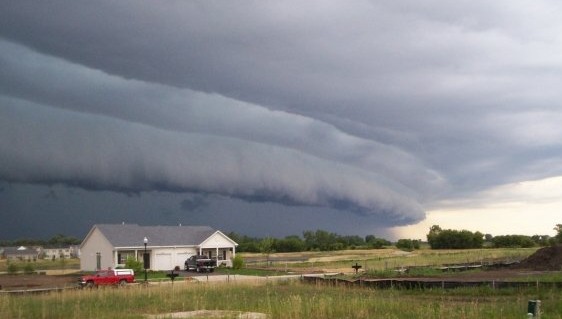
The National Weather Service called it a derecho, which is better known as straight-line winds in a widespread area.

The result was pretty devastating when combined with severe temperatures for Ohio, including two 100+ degree days, a rarity here.  People, literally, died waiting for their electricity to come back.

The Platt family, if you've read a bit into my frustration, has gone without electricity since a bit after 5 p.m. on Friday, June 29 and, as I type this at a computer remote from my home, I'm still waiting for power 210 hours later.  My four-person household is still only 0.1% of the total without power in Newark.

Rather than dwell on being among the last AEP customers to be restored, I decided to try, again, as hard as it may be to find the upbeat side of this.

Let's look at the lessons.  As Chicago Mayor Rahm Emanuel, paraphrasing, once said, "No good crisis should go to waste."

Not Moving to Underground Service.  Some are calling for underground service.  I say this is not a lesson.  It's an unnecessary cost.  My home has underground service.  It didn't help.  The only building at the Port Authority's base campus without power after the storm is the one that had underground service.  Limited resources should go elsewhere.

Increased Technology for Grid Information.  With RFID's and wireless broadband, it seems almost antiquated to not have some basic "smart grid" technology adopted on a broader basis.  People calling in or going to a website to report power down is old fashioned by today's standards.  Even our underfunded city sewer/water services have better ways of knowing the status of their services and collecting meter data.

The money spent sending trucks and manpower to "see" if power is out and the money spent manning call centers to take the calls could be better spent upgrading the grid data reporting capabilities and devoting manpower to quicker repairs.  Skill up and tech up, AEP.  This is where the limited resources should go.

Better Preventative Tree Maintenance.  All of us could learn a lesson.  Four years ago, I had my trees pruned, including having a big one that overhung my garage taken down.  I'm glad I did.  However, I was noticing one branch that I thought to myself the very day before the storm needed a trimming.  Sure enough, it was that one that came down on my front porch.  When I see people's homes damaged or their power lost because a dead tree came down, it's awfully hard to have sympathy.   Resources should go here as well.

Less Crying Over Trees.  I'm going to get some grief at our campus when we take down the massive sycamore tree that created our only "emergency" tree problem at the Base last week.  That's unfair.  The Port Authority has planted over 100 trees in recent years and losing one that puts people and property at risk is hardly worth shedding a tear.  The politics of tree preservation is partly to blame for this crisis being made worse.  We all need to let up on AEP and let them take down what should come down among trees.

Friday, July 6, 2012

On Having No Electricity for 157+ Hours: The Glass is Half Full

One of those Facebook images that has passed so many times I can't give credit to the originator.
I'm looking at the upside of life without power.  157 hours without electricity in your home is half of something. I'll call it half full. 

Increasing Outdoor Family Time.   I went tubing on the Mohican River, something I haven't done in 30 years or ever done with my kids.  We also went looking for relatives' gravestones for my genealogy research.  Cemeteries had trees down but never need power anyway.

Getting No Political Calls and Less in the Future.  Every phone I own requires electricity so my phone rings without answer and has for days now.  That's doubly good because I couldn't receive all the political calls that all registered voters in Ohio are getting these days to try to get us to identify for whom we are voting plus I have an increasingly better chance of dropping off the call lists altogether for lack of answering.  There are potential future benefits as a result.

Getting Weaned Off Television.   I was already starting to get away from watching anyway.  It takes time away from blogging, right?  I haven't seen even a second of television since more than a week ago.  I may just not renew those TiVo's next time around.  Who needs cable?

Losing More Weight.   Though I've been improving my diet, my still-lingering bad habit of having some cold juice to drink before bedtime has been put on hold, at least, for a week.  I've dropped four pounds this week.

Saving on Utility Costs.  My electric bill will likely be at least 30% lower than this time a year ago.  I'm going after that Time Warner Cable credit too.  Can they prove my cable was working?

Gaining More Appreciation from Our Dog.  Our family dog was starting to act more like a cat these days.  She just lounges around and does her own thing.  She asks for attention on her terms.  She's had a fairly lonely few days.  I bet she rethinks things in the future.

Catching Up on To Do List.  Amish living had me more productive than usual.  The tree got trimmed (Mother Nature did that), the windows cleaned, and the porch swept.  The refrigerators and freezers will get cleaned out for the first time in a long time too here soon.

Getting Work Done.  I've escaped to my office when someone else has had the kids these days.  It's cooler there.  That means my work to do list is shrinking too.

That's a pretty good list.  I'll declare the proverbial glass is half full.

Tuesday, July 3, 2012

On Living Amish


Admittedly, I never thought about becoming Amish.  I wish the storm that went through Friday hadn't given me the experience.  Nonetheless, it did.


As I type this on a battery-powered device, I'm 77+ hours and counting without electricity at my house.

Frankly, I can't remember the last time I was this productive at home.  Maybe there's something to this Amish lifestyle.

I took what was to be a vacation day away from the office and, instead of vacationing, scheduled car repairs (the car took a tree hit), welcomed a tree-clearing crew (the house showed no damage), washed outside windows, cleared the back patio, raked up storm debris (where did that styrofoam come from?), and got more done in any one day in a long, long time.

I was so productive I felt like I could have raised a barn and milked the herd.

Tonight, I'll go to sleep with the hope my Amish experience ends abruptly and soon. I'm grateful for the productive time though.