Showing posts with label government innovator. Show all posts

Friday, September 22, 2017

My Snail Mail E-Mail


I got an email with an image of my soon-to-arrive snail mail today.  That's a first.

I signed up recently for the U.S. Postal Service's Informed Delivery Digest.  It promises to send me an electronic image in advance of what I can expect to see in my house's real mail box.

An invite to the upcoming Rotary auction.  A monthly mortgage statement.  My water bill.  A solicitation for something for my youngest daughter.

I signed up for it.  I'm intrigued.  But I'm still trying to figure out the usefulness to me.

However, I see the usefulness to the USPS.  It's strategic.

There's efficiency in there some day.  I can't help but feel that part of the strategy is to build toward a day when delivery isn't every day.  If I know what's coming, I may not be far off from being able to pay to accelerate delivery at a future time when delivery doesn't come to my house every day.

There's a look to the future in there.  I may be able to lighten their load by simply refusing delivery of some junk mail too.  Drone delivery of mail would be cheaper if there's less to deliver.

For now, I'm still subscribing to email and snail mail email.

Tuesday, September 19, 2017

A Voinovich Lesson


Speaking with a gathering of young professionals recently, I quoted from a book written by the late George Voinovich, former Ohio U.S. Senator and Governor, with an eye on lessons.

I had three reasons to quote George Voinovich.  For one, he truly was a guru on public-private partnerships and the book hits home with real life lessons from his native Cleveland.  He also had an affinity for the Aerospace Center as it was an Air Force Base that closed during his gubernatorial term.  Thirdly, I worked for him for the better part of seven years and learned a lot of personal lessons from him.

I copied two conclusion pages below.  For the young professional audience, the message was to strengthen your bench.  He wrote, "Pass your hard-learned lessons on to the next generations."


The Voinovich lesson gave the reason, succinctly, that I was telling this group about the Port Authority public-private partnership story from a historical- and future-looking point of view.

Thanks, Governor.

Friday, June 2, 2017

Ohio-Native Plantings Approach a Smart, Eco-Friendly Move

Ohio-native plantings like this stand out for sure
The entrance on the east side of the Aerospace Center was landscaped with only Ohio-native plantings. It's a policy of the Port Authority, and has been for years now, to require all new plantings we maintain on our campus to be exclusively Ohio-native.

That means, only plantings that are native to the Ohio climate zones are able to be planted.

The experts at Dawes Arboretum predicted that the native plants would be a hardier plant and that the maintenance would be lower.  They were right.

The Ohio Native Meadow in 2016
We planted a whole acre under Ohio-native meadow grasses and wildflowers.  We have to mow it once a year and that's an area that used to get moved every week for up to nine months a year before.

We have two landscaping areas that proudly wear the Dawes' Ohio Sustainable Landscape label.

Our Port Authority prides itself on being a government innovator.  We like to set an example for not only our fellow governments, but the private sector too.

Doing things that are both eco-friendly and economic friendly is an easy, smart move.

Monday, August 26, 2013

Our Value Proposition? Value


I'll be in Ogden, Utah one day this week telling our Aerospace Center story to an Air Force program management office cadre.  It's really our value proposition--Value.

The Port Authority prides itself on stable costs for our customers.  You don't get more stable than this.

We can boast 12 years of flat rates for our customers.  Compared to inflation, the difference is more than $10 million saved in the past dozen years.  And counting.

Monday, August 5, 2013

Green Doesn't Have to Mean Red


Doing something that's ecologically-friendly doesn't have to cost more than it's worth.

The Port Authority's Ohio Native Meadow is one outstanding example. Inspired by Dawes Arboretum and a setting at The Wilds, we converted a one acre section of lawn north of one of our industrial buildings to a meadow in 2012.

The seed cost some money and the time to till and plant it was an expense.

We don't have to mow it, though, and nature provides the setting that construction didn't have to provide.   In time, these will pay off and our green investment will be in the black.

I typed this blog while sitting among the Ohio-native plantings that, just a short 18 months into the experiment, have already brought wildlife with them.

Friday, April 26, 2013

Ohio's Driverless Car Story Can Be Strong


Ohio has a strong story to tell on the driverless car.  It really does.  It's time to start telling it.

Ohio is strong in automotive.  In fact, we are number two in the nation.  The "Big 3" remain headquartered in Michigan, but many of their plants are in Ohio.  Honda buys over $9 billion in Ohio goods and services to make cars.  The automotive industry is in every county in Ohio in some form or another.
 
Ohio is strong in aerospace-related industries with capabilities that mirror many that the autonomous car would require.  Not only is Ohio the #1 supplier state to Boeing, it also is to Airbus.  Aerospace has deployed many of the driverless car similiar technologies for decades.  Autopilot isn't theoretical anymore.
 
Ohio is strong in industry and university research.  Ohio University has worked on the NextGen FAA systems replacing current radar.  Ohio State is working on a driverless car.  That $100MM+ in Third Frontier money has got to be going somewhere!  I hope anyway.
 
Ohio has a legacy in sensors, GPS, MEMS, inertial guidance, metrology, and radar.  I don't have to look far out the window of my office to see that.  The customers at the Port Authority's Aerospace Center campus touch every one of those industry subsegments.  Our Port Authority owns not one, but two anechoic chambers for calibrating and testing radar.
 
We're behind on the organizing side, though, I tend to think.  It's not too late though. 

Wednesday, February 27, 2013

The Chicken or The Egg Debate: Electric Cars or Driverless Cars?


Which will come first, the electric car or the driverless car?

A piece at The Energy Collective both sparks the debate and answers it too.  The article "Driverless Cars Before Electric Ones" has John DeCicco pretty effectively making the case for the driverless one.  Hands down.

There's much to ponder here.  DeCicco has thought this through.  Here's some tidbits:

"Certainly the electric car has its passionate believers who are jazzed about the technology. . .But private passion does not justify public subsidy." DeCicco makes the case for a market-driven approach that sees subsidized eletrification of cars, should it go that way, being quickly made obsolete by the driverless car.

"Like the automobile a century ago, the driverless car must evolve; it cannot be centrally planned, at least not in a western democracy such as the United States."  He's right.  Government must be the quiet facilitator, not the loud dictator in this evolution.

His central point is a topic in its own right:  "The policy emphasis on electrifying transportation sooner rather than later is just the latest act in the long-running, politically scripted circus known as the alternative fuel follies. It's time to turn on to the promise of truly tuned-in mobility and drop out of the premature promotion of plug-in cars today."

I put myself there.  As I've written before, I'm getting more and more convinced that the driverless car will be here in my lifetime.  What can be do to make sure that remains on track?  I don't plan to live much past 110 years old so the clock is ticking.

Friday, December 7, 2012

Glad to Carry Dead Weight


Not many places would say they are glad to carry dead weight.

Our Port Authority owns a dead weight machine that's installed in the Air Force Primary Standards Lab run by Bionetics.  It's one of the 52 different metrology labs on our Aerospace Center campus. 

The machine was installed 23 years ago as a way to more accurately measure weight and force.  It's accuracy is just one of the many things that differentiate our place from most labs on the planet.

So, yes, we are glad to carry dead weight.  Indeed.

Monday, October 15, 2012

The Ohio-Native Meadow Project: Year One


A year ago, the Port Authority began a demonstration project that was the product of a brainstorming session at The Wilds on what basic things we could do to improve the campus setting for our customers' personnel at the Aerospace Center.  We called it the Ohio-Native Meadow project. 

We took about an acre of land that was undevelopable.  It sat too close to the creek and right under a high voltage transmission power line.

Yet we still had to maintain it.  It got mowed weekly, yet it was only seen by security cameras and walkers by.

So we copied what we saw at The Wilds and followed the lead set by The Dawes Arboretum and planted a meadow with a seed mix consistently of only Ohio-native wildflowers and grasses.

From our research, we knew it would take a while.  Most sources said it would take a couple of years to really take.  And that's proven true, especially in a drought year.

But it's already proven to be a good project that we'll probably look to duplicate.

We don't have to mow it, except to cut it down once a year as part of a proper maintenance plan.  That has allowed us to keep lawn maintenance costs flat and spare a few carbon molecules from less fuel consumption.

And it's a nice, quiet setting too.

I've not done this yet, but, in theory, I could go out from my office and conduct business from there.  I can transfer my phone to my iPhone or iPad and be checking e-mail, surfing the web, and taking and making phone calls as if I was right at my desk.

Pretty cool.  See the video for more.

Thursday, September 27, 2012

Technology, One Generation to The Next

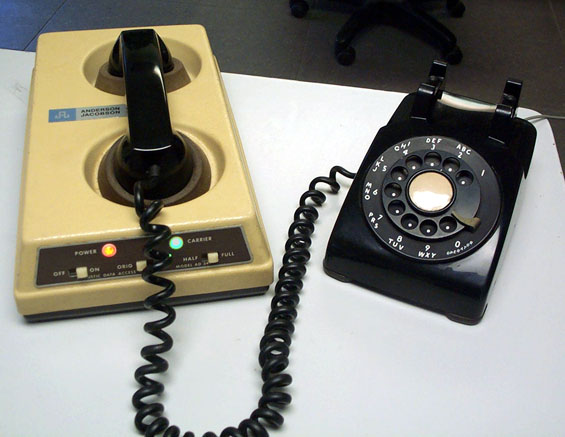
The computer network of the early 1980's looked like this.
One computer.  My high school had a dot matrix printer connected to a rotary dial phone with a big old "modem" box.  It printed out career information after a few bleeps and whirls.  The whole school had one computer.

What a difference one generation makes.

Most schools, even my old high school,  graduated from the dot matrix machine to computer labs and banks of computers in the classrooms to share by the late 1980's.  That's still the norm today.

This year, Licking Valley High School in Hanover, Ohio took a quantum leap forward.  They call it one-to-one computing.

A Netbook computer like the type used at Licking Valley HS.
Every student at Licking Valley High School has a computer. Yes, every one of 700 kids and teachers has a computer.

Spurred by the success of a school program at Defiance County, Ohio and a few other schools in the country, Licking Valley High School began a transition that saw 700 notebook computers turned on at the school on day one this year.  This local story could catch on.

It's easy to see, now one month in, that their entrepreneurial, risk-taking superintendent and principal have spawned a modern example of innovation and collaboration in the classroom.  A student showed his teacher an application he had discovered and shared on the first day of class.  It's been used in the classroom by that teacher from Day 2 and since.

Though no one will claim the total costs saved on paper, textbooks, and cash outlay for computer labs makes up for the whole cost of the program, what's the value of getting an even playing field with computers and Internet access in to the hands of students at least 15% of whom did not have such access before?  The real world has entered the classroom in Hanover, Ohio.

It's not a social program either.  The parents have skin in the game with a $50 annual maintenance fee.  The students' peers man a help desk to help their fellow students navigate computing and, even, repair broken machines.

The fact that this innovative approach is taking place in a rural school district all the more makes the point this column frequently tries to make too--innovation knows no population density.  Indeed,  Hanover, Ohio now has a ratio of computers per kid most likely higher than any big metropolitan city in the country.

Good stuff.  Well done, Licking Valley.  Stand proud.  Share your story.  Here's hoping others take notice and follow your lead.

Thursday, September 13, 2012

Reflecting on My 2,000th Tweet


Yesterday saw the milestone of my 2,000th tweet.  Going back to my first tweet in 2009, that's not really very many.  Or so I say.

Some say tweeting is a waste of time.  I tell people that sending a tweet is like sending an e-mail.  When I do the math, I've sent 30,000+/- e-mails during the same time of sending 2,000 tweets. 

Some say they don't see the value of knowing what someone ate for breakfast.  I agree with that, but my light hearted 2,000th tweet about my Segway trip has more to it than meets the eye. 

Does a typical Port Authority CEO get to glide on a Segway every day?  What, then, does that say that distinquishes me from the stereotypical Port Authority CEO?  Isn't there value in standing out among the hordes?

Get the point?

I can justify Twitter's time value.

Tuesday, July 24, 2012

On Not Selecting the Low Bidder


Saturday, the Port Authority succesfully completed the removal of a 160-feet tall former water tower.  The tower sat next to our new $5.7 million building, adjacent to the fire pumps that serve our campus' fire suppression system, and over top a high pressure gas main.  It became unnecessary when, a couple of years ago, the City of Heath was successfully persuaded to build a more capable tower nearby.

Thanks to a change in state law, we didn't have to just select the low bidder.  We owe a thank you to the Ohio General Assembly and Governor Kasich for that!


The contractor selected from our selection process was Iseler Demolition.  Their reputation was superb for deliverying on-time and per-contract.  They, along with two others, were invited to bid on the project under a qualified contractor process. 


Iseler's crew started at 5 a.m.  They were done and gone before 5 p.m.  All in one day.

Amazing.

It was ahead of schedule and under budget also.  Triply amazing.

Friday, July 13, 2012

Bringing Our Customer Along on Staff Retreat


Our Port Authority had a day-long staff retreat yesterday.  As is our custom, we combine strategic relaxation, strategic re-education, and strategic re-examination into the day.

After the relaxation part--a tour of Licking County's Cranberry Bog on Buckeye Lake and a boat tour of the lake--we sat down for a re-education on some of Vistage Speaker Gerry Layo's materials on linking customer service and growth in sales/revenues.

And for the re-examination portion I took Gerry's advice by adding a chair for our customers appropriately labeled "Reserved for Our Customers' Point of View."

The customers' point of view clearly was part of the day too.  We came away with a to do list of seven key items to improve our operations' customer service approach ranging from how to manage voice mail to better signage for on-site amenities.

Thanks, Gerry.

Saturday, May 19, 2012

My Encounter with a Nomadic Salesman


Had to share.

Monday, I heard the story of a Mayor, frustrated by yard signs cluttering up his city, decided to be a nuisance to the nuisances.  He used robocalling to bombard the sign people with phone calls until they removed them.  That guy's a government innovator.

Wednesday, I became that Mayor, sort of.  The twist was on me, though.

The sign above was planted at the intersection of two roadways on our Port Authority industrial park property.  I was irate.

So, I called the phone number and left a message.  I warned the sign planter that we charge for advertising and that I was wondering where to send the $1,000 invoice.

To my surprise, he called back!  It was a heated discussion which saw me threaten robocalling on him.  He threatened to go to my Board.  While I was out, he actually visited my office.  It wasn't pretty at all.

Next time, I'll just yank the signs.

Sunday, April 22, 2012

Earth Day is Today


I don't know who decides these things, but today is Earth Day 2012.

Our Port Authority had three activities of note that really fit well with Earth Day and a pragmatic approach to green, eco-friendly efforts for an industrial park.  Let me share.

LEED Certification Gotten.  We were proud to get word after spending much green with the U.S. Green Building Council, that the LEED Certification for our newest building on the campus was approved.  Our news release is true.  It's only the second building in Ohio to acheive the hard-to-get LEED for Core and Shell 2009 status.

Segways Touted.  We tweeted about our use of Segways on our campus a few weeks back.  That social media splash translated to a above-the-fold, front page story on Friday's Newark Advocate.  The eco-friendly value from putting 420+ miles on a Segway is calculated in less pounds of carbon.  That's Earth Day worthy too.

An Ohio-native Meadow Re-Planted.  We set aside one acre on our campus late last year for a demonstration project to convert the property back to a meadow using only Ohio-native plantings.  The experiment didn't grow when the rest of growth came so our staff, including me, got our hands dirty planting the second round of seedlings to try to restore this location which is not likely suitable for building.

The next time we mention these things is as part of the EcoSummit 2012 event Columbus is hosting this coming Fall.  Participants can pay witness to these and other pragmatic, eco-friendly actions in a suburban industrial park.  The organizers call it their Green Engineering/Manufacturing at a Regional Port Authority excursion.

Monday, March 12, 2012

Another Mode in Newark

A Segway Experience as part of the 50th Anniversary Aerospace Center STEM Industry Day at The Works resulted in a likely first. 

People have arrived in downtown Newark many ways--horses, canal boats, buses, trains, trucks, cars, and more.  Yesterday, it was via Segway PT.

Friday, February 17, 2012

The SOTPA: Optimism in a Sea of Uncertainty

On this date 95 years ago, Wally Horton was born. If Frank Capra were to make a Wally Horton version of It’s a Wonderful Life starring Wally, it’s interesting to ponder what Capra would show for Licking County and Heath minus Wally’s influence. The same could be asked about the Port Authority.

That prompts me to share a “State of the Port Authority” outlook that my Board got Tuesday.

Defense cuts at the federal level are impacting close to home and the looming renewal of the current large contract for workload here stand in contrast to an improving deal stream and an improving local economy. There are reasons for uncertainty yet reasons for optimism too.

Defense Cuts: Mixed news. some of our customers saw severe cuts in workforce take effect in early January.  However, they have actually started to bring a few of those people back already. Others have not seen the severity of cuts from the most recent rounds and, in fact, recently has seen job growth. We still await a ribbon cutting or two on some exciting projects.


Economic Impact: Many may recall that the Port Authority built roads, a bridge, and a new spec building among capital projects during this “Great Recession.” These investments were really, in part, a local economic stimulus. That’s why it’s worth noting a recent report that shows $12.8 million has been spent with Licking County Chamber of Commerce members in the past three years and even more with local vendors. We were driving full bore into the storm while others were sitting back and weathering it. The Port Authority has achieved a higher visibility in the community as a result.


Deal Stream: Greenfield sites tend to lag in the economic development deal stream. However, we are seeing a deal stream in the first quarter of this year approaching what we were seeing in late 2007. Increased marketing by the new Grow Licking County CIC is a key part of sustaining the deal stream into the future. Workforce development efforts by C-TEC, COTC, and The Works are also critical.

Tech-Savvy, Government Innovator: Though many may call it an oxymoron, tech-savvy and government innovator are terms that make sense in describing the Port Authority. We have gone a year, now, with paperless meetings on iPads and can report benefits from this. We also have almost a year of deployment of Segway PTs and can report on cost savings and improvements from this as well. Our lobby message centers, new “situation room” approach to monitoring the facilities, and integrated use of social media are all stand out examples that fit this image.

Balancing uncertainty and optimism is nothing new to the Port Authority. That's why our Board accepted a $23 million 10-year capital plan for the Port Authority that shows we are firmly planning for the best, while preparing for the worst.

Tuesday, February 7, 2012

On Public-Private Partnerships

Here's another slide from the recent IEDC Leadership Summit.  During a "State of the Industry" report from IEDC President Jeff Finkle, this slide caught my attention.

The private sector, increasingly, is taking the lead on funding public-private partnerships.  In fact, this slide shows a reversal from just 14 years ago.

Jeff added that 85% of IEDC members had undertaken new partnerships in the last year and the most frequent such partnership was with a Chamber of Commerce organization.

We resemble these trends.  Licking County officially kicked off its new Grow Licking County CIC yesterday with the County and the Licking County Chamber joining forces with the Port Authority (an IEDC member).  Though its brand new and fundraising is still underway, there's hope for a public and private balance in funding too.

That balance is critical to success.

Thursday, January 12, 2012

What Apps, Again!

A close second in App of the month is LogMeIn.  LogMeIn was free to PCs but had a hefty charge on iPads and so I was reluctant to try it out.  The new price of $0 enticed me to try it.

The LogMeIn app helped me fulfill a second mental image.

In 2011, the Port Authority installed four lobby message centers as a way to better communicate with our customers. They are internet-ready televisions connected to our wifi network.  We also bought Segways to, among other things, more easily get around our campus to keep things up and running.

The mental image, now reality, is of one of our staff on a Segway while logging in to the lobby message center for an update.  This image contrasts with an image in my mind from 2002 when, to update the onsite marquee, one of my staff was standing in the bed of a pick up truck changing out the plastic letters on one of those message boards.

I guess that's the difference ten years makes.

With the LogMeIn app, we can do that from an iPad instead of a PC. You can carry an iPad on a Segway. It's a bit hard to do the same with a PC.

Wednesday, January 11, 2012

What Apps!

IP Cam Viewer has my vote as, at least, the App of the month.

Ever since we bought these iPads, I've had two mental images in my mind of how they could be used at the Port Authority to take facilities management to another, more high tech level.


The IP Cam Viewer fulfilled one of those images.  I can view our Port Authority's ten security cameras with internet connections LIVE via the app on my iPad. 

Up to now, I've had to rely on still images on the PC or logging in (laboriously) to one of the cameras to view it live.

The app has already proven its $3.99 value.  Last night, while just doing a check-in, I noticed that the lights illuminating the big Boeing sign on our building were cycling from on to off rapidly.  The fix comes this morning, but there were no reports in otherwise so I was the only one reporting a pretty visible problem.

I'll save the second mental image for tomorrow.