Showing posts with label Rust Belt. Show all posts

Sunday, July 17, 2022

Writing Our 2020’s Song About Growth


Songs from the ‘80’s and ‘90’s are part of my youth in more ways than one.


Now Main Street’s whitewashed windows

And vacant stores

Seems like there ain’t nobody

Wants to come down here no more


Bruce Springsteen’s My Hometown might as while have been about my hometown.  I grew up in a steel town that doesn’t make steel anymore.  Much of my classmates did what Springsteen sang about—packed up our bags, maybe heading south.

Springsteen sung a ballad about my father’s hometown too—Youngstown.  It’s a melancholy song of a declining place in a country that didn’t appreciate manufacturing and the nation’s cravings for steel.


Well my daddy came on the Ohio Works

When he came home from World War Two

Now the yards just scrap and rubble


Even Billy Joel got in the act too singing about decline in the ‘80’s.  Allentown was about Pennsylvania towns, but it spoke to many of us Ohioans back then.


Well we’re living here in Allentown

And they’re closing all the factories down

Out in Bethlehem they’re killing time

Filling out forms

Standing in line


My kids and grandkids (I’m grateful for one of those on the way.) won’t have the same tunes stuck in their heads that I did.  The lyrics about growth and progress are writing themselves in places like Newark and Licking County in the 2020’s. 

A whole new generation of song writers have new fodder of so-called “problems” in Ohio in the 2020’s—more jobs than people to fill them, more buyers than sellers of homes, and more interested industrial businesses than available industrial sites.

My generation has an obligation to remind later generations that these problems are not really problematic in comparison to the alternatives.  Trust me.  I watched decline, not just listened to it in songs.

It’s harder to figure out how to fund a shrinking school system than a growing one nearing capacity.  It’s a real task to rebuild old streets on a dime than pave new ones on a dollar.  Waiting for your job’s new electronic paycheck in your account beats waiting for the old paper unemployment check delivered to your porch.

I’ll suggest that Bruce could write about Intel.  It’s first new factory in decades is happening in Ohio.  Ground was broken in Licking County earlier this month to signal the realness of a whole new semiconductor industry coming to the Heartland.  Suppliers are already here in Ohio and the promise is more are on their way. These facts bring with it a new song of positive progress instead of an old song of stagnation.

Billy could write lyrics about blossoming manufacturing of all sorts like soy crisps at GB Food in Heath or polycarbonate at Covestro in Hebron.  I’d suggest song writers paint a picture about Behr paint soon to be made in Licking County or get fired up about gas compressor components assembled at the recently tripled-in-size Ariel plant.  The Tamarack Dairy milk plant is expanding.  So is the thin film plant owned by Transcendia.  Expansion story lines of the 2020’s sure beat the opposite story of U.S. manufacturing in the ‘80s.

Given decline or growth, who doesn’t choose growth for their kids and grandkids?

I think there really are some lyrics in there somewhere. Together, let’s sing about growth in the 2020’s in our hometown.

-------------------------------------------------------------------------------

This development column is a regular column in The Advocate.

Friday, June 9, 2017

Back From Derided


From Warm Center to Ragged Edge is a book I'm curious to read.  The Washington Post reports on the book that looks at the erosion of the Midwest U.S.'s standing from 1920 to 1965.

According to the Post review, Jon Lauck's book explains how a mass media-fueled urban viewpoint and a stronger Washington are behind the derision of the Midwest.

The Post author of the review had to seize upon the stereotypes to make his point.  He references "Rust Belt" pejorative twice.  His editors found a way to slip it in two more times.

Not enough stereotypes?  Then, he writes, "This [book] may sound dull as ditch water to those who believe that the 'flyover' states are inhabited largely by clodhoppers, fundamentalist zealots and loudmouthed Babbitts."

Nonetheless, gaining an understanding what's behind causing a whole region to be derided so much as the Industrial Midwest has been and continues to be is worth a read.

It's also the key to coming back again.

Wednesday, May 24, 2017

If The New American Heartland Were a Country. . .


If the New American Heartland were a country, it's GDP in 2015 would have totaled $7.99 trillion.

That's the combined GDP of the states that make up the so-called New American Heartland that gained its name from a Center for Opportunity Urbanism report by that same name.

Now ponder that.

At that level, the New American Heartland would be larger than the GDP of Japan and Germany combined.

Can you think of a country where a part of it was disparaged with the term "Rust Belt" like much of the New American Heartland is disparaged?

Ponder that.

So, yes, it is a big deal that this region needs to change the narrative that sees an impactful part of the U.S. labeled by a pejorative.

The current narrative, honed by a negative term, has to change in order to change the future to a more positive one.


----------

Do the math yourself with a comparison of nominal GDP of states and countries at Wikipedia.

Friday, May 19, 2017

New American Heartland Signals End of "R" Word


"The New American Heartland" report made it's debut at the City Club of Cleveland yesterday.  It's now officially out in print.

I'd like to hope that the gong at the City Club was the signal going forward that the "Rust Belt" term has come to an end.  Indeed, that was my personal contribution to the discussion at the panel.


More than that, though, I hope that the narrative that the report supports goes forward in development circles.

The New American Heartland's combination of manufacturing prowess, logistics, energy, and human capital are the formula for revival of Middle America and renewing of the middle class.

Joel Kotkin said it best.  "The future of the Heartland rests with the Heartland."


------
News Clips on "The New American Heartland" report:

America's Heartland is Critical to Our Future

LeBron James and Revenge of Fly Over Country


Monday, March 27, 2017

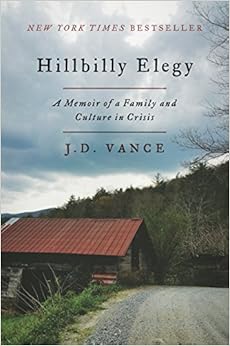
An Ohio Pejoratives Elegy


I confess.  I've not, yet, read the book.

I've heard "Rust Belt" used a bit too much to market the book.  I also fear the title "Hillbilly" could invoke stereotypes and cause a broad brush stroke on all of us in Ohio.

But I liked the messages J.D. Vance, the author, has sent recently with his highly-visible return to his home state of Ohio.  It's clear Elegy is the emphasis in the title.

For one, he's a homesick Ohioan who took the first opportunity to return to his home state when his circumstances permitted it.  At brief remarks he gave in Licking County Sunday night, he said he was hearing too many people where he lived in California who were disparaging Ohio to want to stay there.

Secondly, he gives a message of upward mobility.  His personal story is one of upward mobility, but it's also clear he intends to send a message for a wider audience with his personal story as example. He told a Licking County Republican Party audience on Sunday that the GOP should be "the party of working middle class people."

Perhaps, most of all, Vance is triggering an elegy for the phrases that have been used to disparage Ohio for decades.  It's time we mourn the death of the Ohio pejoratives like "Fly Over Country" and "Rust Belt."

Sunday, February 12, 2017

A Place Debate Around The Term Rust Belt


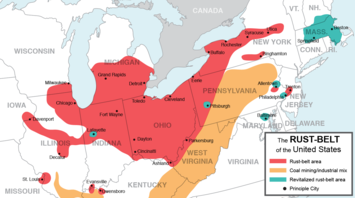
I don't like that when one Googles "Rust Belt Ohio" and looks at the images the search term pulls up that my hometown shows up first.  That's St. Joseph's church and the South Side of Massillon, Ohio right there.

I want to change that.  I detest the term Rust Belt.

Though I can agree to wanting a change, change to what is the question. I'm not in the camp with those who are advocating for singular focus on classes of people and attempting to make Ohio "hip and cool" as a magical recipe for economic development.

The concept implies steering us away from the manufacturing sector that fueled, and still fuels, our economy.  Opportunity for a cross-generational, working age population is how to grow our economy. Upper mobility is our aim and from where my thinking comes.

Ohio Governor Kasich is quoted as taking on the cause of burying the term Rust Belt.  A few national stories over the weekend ran the story.

It was the contrarian to the change in name and who is also quoted in the articles, Richey Piiparinen of Cleveland State University, who caught my attention though.  He has embraced the "R" word, but I nonetheless often find myself agreeing with him because he often takes the view that what we need to change to is a better version of ourselves, not something we aren't or something we used to be.

Piiparinen points out that later generations don't share the same dim view of how things are based on a rosier view of how things used to be.  The distance between where they are and where they want to be isn't as great as those who are cursed by remembering some better time.

He's quoted in the article as saying of the emerging working age generation, "They don't have the psychic baggage, they were not born in the heyday. And so this idea of resiliency, of struggle, of fighting for your land, of being proud of your land, but at the same time not having any illusions about what we were, that's been a whole new generation owning that term."

This is a place debate really.  What sort of place does Ohio want to be?  What sort of place does the entire American Heartland of the country want to be?  What opportunity is there to be what we can  be?

Monday, January 12, 2015

Channeling Every Cities' Inner Cleveland


The latest column at newgeography.com is a must-read for people who are willing to let their perceptions be challenged, with facts.

Guest writer John Sanphillippo's column, "The 'Inner Cleveland' of Trendy Cities" and puts urbanists on their ear.

Guess most people couldn't guess from where his Cleveland-like photos came.

His final paragraph is almost like fatherly advice. It's an invitation to Millennials to embrace the Midwest.

Here’s my advice to both young people who are just starting out as well as older people who are struggling to manage in a tough economic environment. Stop fighting expensive housing markets. Stop trying to wedge yourself into an overpriced shoe box apartment in a mediocre neighborhood in a top tier city. Stop driving an hour and a half out to an isolated subdivision just to hold on to your status in a big metroplex. It’s not worth it. The interior of the country is absolutely full of amazing places at a price you can comfortably afford. Give yourself and your family a big raise and leave the coast behind.


Check it out.  He's right.

Monday, December 8, 2014

An Upbeat Pairing, But With A Bit Too Much Rust


Joel Kotkin's latest piece in Forbes is jointly authored with Richie Piiparinen and titled, "The Rustbelt Roars Back From The Dead."  It's an upbeat look at the Industrial Midwest, but peppered a bit too much with the "R" word for my taste.

The gist of the piece is focused on the revival of manufacturing which is sparking a revival in the Midwest.  That's contrasted with urbanists, Richard Florida thinkers, and the stereotypes associated with the term "Rust Belt."

You'll note that the "R" term is used as an adjective and one word--rustbelt--and only once used as a proper noun and capitalized outside of a title or subtitle.  That's not just a process observation on my part, it's clearly intended by the authors.

The comparison of the Midwest to the nation was compelling.  The pair wrote, "For much of the past half century, the rustbelt states suffered high levels of unemployment. But today Ohio, Indiana, Minnesota and Wisconsin have considerably lower rates of unemployment than the national average."  If they hadn't preceded that paragraph with a couple doses of the "R" word, I would have been proudly smiling.

They take on the "hip and cool" sect too.  "Sure, Cleveland has got a microbrew scene as well, just like Portland. But a pricey pint requires a solid paycheck, which means Cleveland has microbreweries whose products are consumed by people who know microbes, and how to fashion steel, or develop new energy resources. Those tasty brews are consumed by producers."  Again, the best parts exclude any rust references.

Those heck-bent on using "rustbelt" as a pejorative wouldn't like this factoid from Kotkin and Piiparinen:  "In terms of engineers per capita, both Dayton and Detroit rank among the top 12 regions in the country; they have many more, per capita, than Boston, San Francisco, New York, Los Angeles, and Chicago."

Overall, I'll still label it a must-read, but while I still encourage Kotkin and Piiparinen to shake the rust.

Thursday, July 10, 2014

The Number One Thing To Do at the Cleveland Republican Convention

Bury the term Rust Belt.  That's the number one thing I would do at the Republican Convention in Cleveland in the Summer of 2016.

Ohio would have already been at the height of still another "swing state" presidential election and seen millions of negative television ads.  The national media will re-link again and again ad nauseum the term Rust Belt with Ohio.

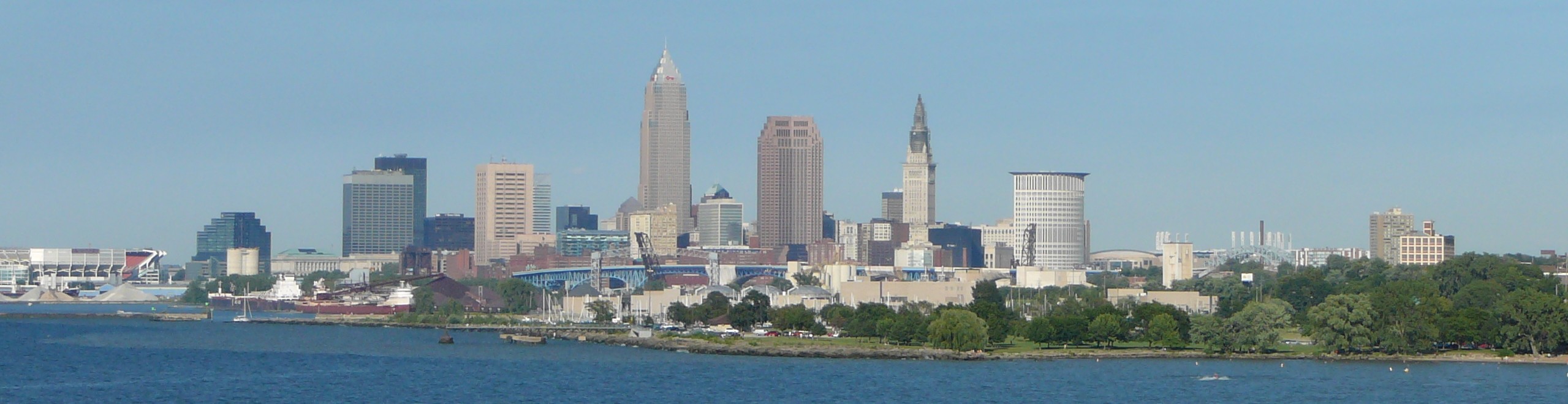
Cleveland should defy the expectations of visitors who have been pre-conditioned to expect a rusty, ugly place.

So, prepare for burial.


Right there at Erie Street Cemetery across from Progressive Field should be a burial plot set aside to bury the term forever.

Tuesday, June 17, 2014

Challenging Those R-Belt Myths


Richey Piiparinen must appear as stern as this photo of a nun in a Cleveland area restaurant to some "cool and hip" city thinkers.

Though he favors throwing around the "R" word too much to my liking (that is his thing, though), I label his NewGeography.com piece a must-read.

He pins to the ground the whole premise that population growth is a measure of success for a region, and its economy.  There's lessons for urban and suburban economic development policy makers in his message.  Take off those rust-colored glasses.

His summation sums up a lot of data:  "Regaining focus entails removing the rust-colored glasses. Rust Belt leaders will see there are assets to work with, not to mention feel the freedom that comes with no longer being a study in contrast for those touting a future that really isn’t."

See The Ugly City Beautiful:  A Policy Analysis.

Tuesday, June 10, 2014

A Few of My Favorite Things, One Not So Favorite Thing


The latest from Joel Kotkin hits on a few of my favorite themes, less one.  His "Shaking Off The Rust: Cleveland Workforce Gets Younger And Smarter" hits close to home for me, a Northeast Ohio native.

Kotkin and his writings are among my favorites to start with and his latest column added manufacturing, Ohio, Cleveland, Pittsburgh, workforce, and anti-smart growth themes to the mix.  If he had only left out the "Rust Belt" term, it would be completely a favorite.

The piece is a must-read nonetheless.

Kotkin picks up on the research by Cleveland State University on the rising educational attainment and influx of working age population in Cleveland.  He, rightly, robs the credit for it from the various movements to make the City "hip and cool" and firmly plants it with pragmatic reasons--costs of living and a presence of advanced manufacturing.

Thursday, May 22, 2014

Rust Belt As A Whipping Boy


It's not even a Presidential election year and, yet, some group found a reason to invoke the "R" word in a television/YouTube ad.  The group is trying to advocate for their anti-legislation stance using the fear of  future repercussions with legislation they say will "send us back to the Rust Belt."

Rust Belt is a pejorative.  There are better phrases to use to describe our Ohio economy.

It's debatable whether SB310 is good or bad for Ohio manufacturing.  One could, in all fairness, argue both ways.  However, it would have been better to bury the Rust Belt phrase.  Shame on Ted Ford's group for using "Rust Belt" as a whipping boy.

Tuesday, May 13, 2014

First Glance at A Tale of 2000 Cities: Go Ahead, Look


I can't say I've heard of the Demand Institute before.  Their creative, data-filled web-based report on states and cities is going to catch attention though.   It's memorable and worth a deeper look.

Blue collar, Ohio cities beware though.  The "R" word is present, in name and data.


The graphics version of the report shows the ups and downs of median housing prices in the nation between the Years 2000 and 2018.  California never reaches their peak.  Ohio does, before 2018.


The graphics also allow one to zoom in on states and cities.  There are 2,200 cities in the list, meaning the Demand Institute drilled down into metro areas and looked at city boundaries, not just metropolitan areas like most reports tend to do.
 
As one might expect, red is bad and green is good. 
 
Cleveland got red.  Green got green.
 
Purple sort of lets you off the hook--Cincinnati got one of those and so did Pittsburgh. 
 
Orange means there's a mix of news--Newark got one of those along with 524 other cities in the United States.  25 million people live in places labeled like Newark, Ohio.
 
The only other place making the list in Licking County was Pataskala, getting a near-green dot for its growing population factors.  Mayor Compton will be pleased to learn his city is contemporary with "distinctive services" and "wide-ranging amenities."  Pataskala is one of only four Ohio cities with this status.  The others were Pickerington, Dublin, and Avon.
 
It's hard not to take it personally.  Apparently, I've never lived in a "green dot" place.  Even Oxford, Ohio didn't garner green-shaded status.  I've proudly lived in Massillon, Canton, Springfield, and Steubenville--all which garnered red dots.
 
I've not read the text report, though a quick search found "Rust Belt" mentioned twice with Ohio alongside the term both times.  That's a red flag to me.
 
I'm betting from the graphics version of the report that the criteria favors white collar cities over blue collar ones.  Since it takes a look back to 2000 and relies on past data, it can't tend to predict a return of manufacturing giving a boost to blue collar towns in the Industrial Midwest. 
 
Let's face it.  The last dozen years or so have been tough on Ohio's economy.  Reports like this bear that out.
 
The report greatly is weighted on housing value.  Expensive housing is the magnet for better dot status.  The "Affluent Metroburbs" group accounts for 20% of the housing value among listed cities yet only 9% of the population lives in such places.  There are no such 'burbs in Ohio and only one in the five surrounding states. 
 
I'd say A Tale of 2000 Cities is worth a look.  However, don't go in with blinders on. 

Wednesday, April 30, 2014

Cleveland Brain Gain Explained


Today, Cleveland.com features the work of the Cleveland "Rust Belt Chic" guy, Richey Piiparinen, and Jim Russell under the title "Unexpected Brain Gain Boosts Cleveland Toward New Economy, Study Finds."

The upbeat story puts on its ear those who paint Cleveland as a population sinkhole in a death spiral.

And the piece cites a pretty interesting fact that caught my attention.

The 2010 Census greatly favored cities with big universities to be seen as population-growing, educated locations.

Indeed, anecdotally, I know that the takers of the 2010 Census were extremely aggressive about counting college students where they went to college rather than their permanent address with their family.  My then-college-housed daughter would have gotten counted at her college if I hadn't aggressively intervened and coached her to shoo off the Census hounds who were stalking her dorm's hallways to add to their numbers.

I tend to think there were some politics in that Census approach, but that's another topic.  One of the impacts of counting college kids where they go to school rather than where they make their permanent address is to give cities with big universities a boost in population and educational attainment.

It's a false boost for those cities and a false drain for others.  The impact is negative on older cities with no big university.  Those places' population, by comparison, are older and less educated.

What Piiparinen and Russell's study points out that it is more proper to measure working age population and newcomers to that group as a measure of the demographic ups and downs of a place rather than the conventional measures that come from the Census.

They're right.

Here's hoping the story isn't just a one-time blip in the Cleveland narrative.  There are real reasons to be more upbeat than meets the eye.

Wednesday, November 20, 2013

Ohio Manufacturing Gains Prompt the "R" Word


Manufacturer's News, Inc. sent a news release and a tweet out touting the "slow, steady rise" of manufacturing jobs in Ohio.  Overall, it reports that Ohio gained 0.5% in manufacturing jobs for the second year in a row.  See the full report.

Some sectors, namely industrial machinery and fabricated metals, gained 2.9% and 2.5% respectively, as reported by the Dayton Daily News.

This is good news.

But then the President of the Publishing Company, Tom Dubin, had to use the "R" word.  The third paragraph of the good news piece started, "Once a struggling Rust Belt state, Ohio has experienced something of a manufacturing renaissance." 

Why'd he have to go and do that?

It was like deja vu for the 2012 Presidential race.  Here's some media at work, again, trying to spin the Ohio recovery as a rags to riches story that seemingly demands, almost really requires, they use the "R" word.

For once, I'd like to get my good news on the plate without having to take a look backward at the bad news on the plates in the past.

Mr. Dubin, we have a thesaurus entry for you.

Thursday, September 5, 2013

The Rust Belt Debate Spills Over


I hate the term Rust Belt.  My profile says it--"Detester of the term Rust Belt."  That's me.

My "Rust Belt Thesaurus" post is among the most-read pieces I've authored.  I like to think that I've influenced some folks a little bit with my campaign of sorts to rid the planet of the pejorative.

Since I met him two years ago, Joel Kotkin seems to have taken a bite out of his throwing around the term.  He stills devours "Rust Belt" every now and then, but the lighter "Great Lakes Region" is more often in his editorial diet.  Deserved or not.  I'll take a little credit for that.

This Richey Piiparinen guy is another story though.  I actually agree with pretty much 90% of what he writes, especially about embracing our Great Lakes Region places for what they are, not something they aren't.  I do wish I could put him on a use-of-the-R-word diet too.  His Rust Belt Chic is probably not going away, though.  That's him.

See my latest attempt at persuasion spilled over to Cleveland Magazine's September 2013 edition at a piece titled "Image Conscious."  The magazine's people signed me up to be the "no" to the pro and con about whether we should just adopt the moniker "Rust Belt."

What do you think?  Am I right or am I right?

Wednesday, July 24, 2013

Yes, Rust Belt is a Dirty Word


NewGeography.com's image, not mine
Joel Kotkin's NewGeography.com gave the Rust Belt chic guy another turn at the blog today.  His piece, "Is 'The Rust Belt' a Dirty Word?" is both worth reading and worth answering.

Richey Piiparinen's central point is made when he writes:

"There is indeed a growing movement of Rust Belt pride taking hold. Yet it is not a false pride, rather a pride that’s derived from an acceptance of having become rust. Such can be immeasurable for the psychogeography of the region."

I can totally agree that acceptance of our current status is healthy and, strategically, wise.  We don't need to, as a region, reinvent ourselves to the extent that we try to become cool and hip or imitate some place on the planet that isn't a fit with our culture, our economics, and our geography.

I can't agree, though, with just accepting the term Rust Belt as our collective, multi-state identity or what Piiparinen calls our "psychogeography." 

History is filled with changing the negative terminology associated with races and cultures.  This case is analogous. 

Those name changes--terms with such negative connotations I can't in good conscience even list one of them--didn't mean that those races and cultures had to give up anything of their collective self identity.  No way.  It just meant that they got a clean, fresh start that buried the negative connotations of the past.

We can have it both ways.  We can keep all the things that make us great and change only the pejorative term. That's fine by me.

Wednesday, June 26, 2013

R-Word Alert: June 25th New York Times


Some publications just can't let good news happen without a hint of negativity attached.  The pejorative "Rust Belt" is one way to ensure that always happens when it comes to stories featuring Ohio.

Frankly, this pattern of associating a negative term with just about anything positive that happens in Ohio is just plain lazy journalism.  The "rags to riches" story angle is taught in Journalism 101 and must get reinforced by every editor along the way.

The only way I know to combat it is to call them out on it.

So here's the call out.  Let's call it a R-Word Alert.

The celebration of the opening of a new headquarters for Goodyear in Akron was the example du jour yesterday in the New York Times.  The headline "Akron Shakes Off Some Rust With Goodyear Tire's Help" makes my point all on its own.

Apparently, a story about a $160 million new HQ and associated redevelopment wouldn't be complete without saying, "Akron was a gritty and polluted city that employed 58,000 rubber industry workers." Then, adding in for good measure, "Just like the other industrial cities of the Midwest that formed the Rust Belt, the end of tire manufacturing, and the loss of over 20,000 jobs, was the start of a long period of civic trauma that sent the city’s population sliding."

I guess we can be glad it was buried on Page B6.

Monday, January 21, 2013

Focus on Returners, Not Departers


Joel Kotkin's Newgeography.com turned the blog over to an Ohioan last week and got a taste of RustBeltChic.com and a message not unlike the one put forth here at RickPlatt.com.

Richey Piiparinen's piece titled "Rust Belt Cities: Invest in Odysseus, Not Barney Fife" was a must read piece for economic development folks pondering spending their time on ways to stop the out flow of Ohioans vs. attracting talent to come back.

His core message was right on.  Focus on the people who, in their minds, never left.

His wrap-up says it all and is a reason to read the whole thing:
"So, to all Rust Belt cities—this is where your attention must be turned: not on the ones who are leaving for good reason, but on those returning who have not left for good. They have brought the path of their self-discovery back to your doorstep.  Don’t close the door by screaming at the backs of others."
Indeed.

Thursday, October 25, 2012

Life in a Swing State: Erasing Rust Belt Term Forever


In a dozen days, this Presidential election will all be over and the proverbial spotlight will leave Ohio.  Ohio's recovery begins November 7, or so we hope.

Job One is to go about erasing the term "Rust Belt" forever.  It's time to end use of this two four-letter-word combination.

A Google search reports over 2.3 million items when one looks for the "Ohio Rust Belt" phrase. Yahoo actually claims over 9.8 million for the same search.

All these negative associations surely don't help our collective psyche as a state or our vision as a strong place to invest in for our economic development interests.

Erasing the term won't be easy, but erasing it we must do.

Make it irrelevant.  Though we seem to have hit a bit of an economic equivalent of a speed bump of late, the resurrection of manufacturing in Ohio is really the best way to erase use of the term from the journalistic vernacular.  Rust belt is a pejorative, but there are some that claim we can reverse that thinking with economic gains and make rust belt chic.  I hope they are right.

Push an alternative.  I've written a thesaurus entry with some suggestions like America's Metals Heartland or the Industrial Midwest.  A few national columnists have slowly been dropping it from their dictionaries, notably Joel Kotkin

Get decisive, as a state.  If Ohio would just stop being so middle of the road on presidential elections, there would be several million less reasons for Ohio to be the subject of national news stories with a negative tone in them. 

Let's stop being a swing state!