Monday, October 28, 2013

A Skills Gap? Maybe Not

 
Around the country, there are complaints from many employers of a gap occurring between those seeking jobs and those seeking workers.  Despite still-high unemployment, many report job openings and difficulty finding workers.   It's been called the "skills gap." 

Though I believe there is a skills gap for certain manufacturing skills in certain places in the country, I'm also finding myself more often siding with the growing crowd who believes that the gap could be of a different sort.

A classic example of that different sort of gap came to my attention today.  I saw a job query come across my e-mail among a lengthy list of such queries. 

The posting was for picker/packer jobs.  These are jobs were one takes products from a big box, or picks, then puts them in a different box, or packs.

The wage was listed as $9 per hour on third shift which was 11 p.m. to 7 a.m.  Oh yeah, the job required one pass the background check and drug tests.  Also, given the location, it was more than likely, the job takers would have to drive more than a dozen miles one way to get to the job site too.

For background, know that Ohio's minimum wage is $7.85.  In two months, it increases to $7.95.  So, that's a job that pays barely $1 above minimum wage.

If these jobs get filled, it may prove there is no skills gap at all. 

However, if this one goes unfilled, I think it more proves that whatever HR department created this job posting is the one with the skills gap. Wow.

Friday, October 25, 2013

Lessons From Germany


Triggered by rising energy costs in comparison to the U.S., German companies are looking at U.S. manufacturing facility investments in increasing numbers. 

This tidbit comes from Vistage economists Alan and Brian Beaulieu.  See Alan's latest at "Germany on the Go."  Alan's piece says, "According to a Wall St. Journal survey, 15% planned on increasing spending in Germany; 54% said they were looking to emerging markets or the U.S."

That's good news, but Alan takes it further with lessons for the U.S. on why we don't need to be messing with energy policy that, left to its own, could boost the U.S. economy.

Wednesday, October 23, 2013

Follow Up: About Those Suburban Poverty Numbers

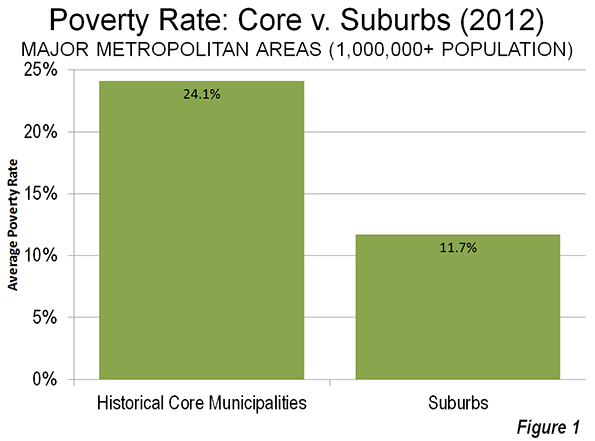
Wendell Cox's counter to the suburban poverty trend predictors
Remember a couple weeks ago when the Columbus Dispatch and Columbus Business First, on the same day, gave above-the-fold news coverage to suburbs and on the same topic?  The odds of either publication running any suburban story above the fold on any day are pretty slim (just being honest) much less the same day and with the same story line.

Clearly, you can't get such an incredible coincidence to happen by mere coincidence. 

When you factor in that the stories had the same story line but different sources and quotes tells one, with very little critical thinking at work here, that this was no coincidence.  Only tactical planning can pull that off. 

Some lobbying groups out there are working to fight for cities' piece of the pie at expense of suburbs.  It's a win-lose fight for a piece of a shrinking pie mentality instead of a grow the pie so everyone gets a bigger piece mentality that would be a win-win for all.

Joel Kotkin's NewGeography.com has given the counter answer just in the nick of time.  The concerted attempt to portray suburbs as facing poverty issues on par with big cities is not only a tactic in some groups' strategy, but it's also lacking facts.

See Wendell Cox's one chart above or see the whole article titled "Suburban & Urban Core 2012: Special Report."

Incidentally, the Columbus MSA suburbs were, on average, at 9.9% poverty rates.  Those rates are below the suburban poverty rate nationally and on par or below some comparable cities like those of Austin, Charlotte, and Raleigh.

What's the point?  It's not about boasting a lower poverty rate at all.  Any poverty rate is too high. Instead, it's about ferreting out the fact that a concerted effort is underway to boost policies for cities at the expense of suburbs.

Critical thinking needs honed in the suburbs.  It's just few of us involved in economic development in the suburbs even realize there is a battle in the first place. 

Tuesday, October 22, 2013

Suggestions for JobsOhio


I was sought out by a management consulting firm hired by JobsOhio to comment on the impact of JobsOhio and the regional groups it has partnered with to deliver Ohio's economic development services.  I consider myself fortunate to get to respond and the bulk of my comments were positive. 

I focused my half hour of input on how to make the economic development of our great state better.  I don't think it's fair I share everything I said, but I did have three key points.

1. Increase the focus on manufacturing.  Too little staffing of this new statewide program is focused on manufacturing.  The next hire JobsOhio makes should be someone with a true manufacturing background to help give the agency a perspective on the industry and align themselves more with that industry.

Manufacturing has been part of our past, is part of our present, and is a huge part of our future in Ohio if we act strategically to seek it out.

I complemented Columbus2020 for bringing prospects to visit our sites in Heath.  That's something no predecessor regional group had ever, ever done.

2. Set up systems to overcome tunnel vision on urban areas versus suburban.  JobsOhio has insulated itself from the suburbs by partnering with regional groups that are, but for one, headquartered in large, urban centers.  Though the propping up of regions by JobsOhio has given them new reasons to be truly regional and, at least in Central Ohio, that has worked, there need to be systems of accountability in place to ensure that all of Ohio's places with the sites, buildings, and workforce get a level playing field. 

It's not about fairness.  That's not the point.  It's about winning more deals, more investment, and more jobs.

As I've written before, it was Ohio's suburbs that saw 93% in 2012 and 94% in 2011 of the state's manufacturing projects reported to Site Selection magazine for the prestigious Governor's Cup.  Cleveland, Columbus, and Cincinnati combined to achieve $0 of the largest projects in 2012.  There's a mismatch between JobsOhio contact with where the vast majority of the deals that are best for Ohio are actually happening.

When the boards and investors are made-up of people who don't know manufacturing and don't know someone who knows manufacturing, they, naturally, can get tunnel vision.  Yet, the majority of prospects and the majority of future, worthwhile state projects are going to come from manufacturers.  Of that, there can be little doubt.

The state needs to be demanding that regional groups that are getting state funding are truly regional in there approach with Board representation from a true, regional cross section.  They need to set up metrics that show people are physically visiting the regional counties that they claim to represent.  They need to monitor to make sure regional groups are equipped to be responsive to manufacturers as manufacturing makes up of most of Ohio's economic development leads.  These are just a few examples.

3. Give statewide attention to emerging industries.  There appears to be a pattern to pick winners and losers, by region, for emerging industries.  That gives away the statewide perspective that a statewide group like JobsOhio can enjoy.

In the past couple of years, I worked with a prospect company which indicated they saw three different regions in Ohio able to supply what was needed to make a potential emerging industry project work.  Instead, the state-subsidized regions went about trying to show the company how they alone in their region could win the whole deal.  The deal was lost.

Another example:  I'm a believer in Ohio's ability to marry its aerospace and automotive prowess to be the leader in the driverless car of the future.  Ohio has the potential to be a leader, but we are lagging in legislation, policy, and coalition-building to realize that potential.  The assets for that capability are not found in any single region of the state so it can't be merely turned over to someone else to do.  A statewide approach is called for in this case for sure.

This is true of many emerging industries--UAV's, fuel cells, nanomaterial, biomedical, etc.  Ohio has vast resources and capabilities, but they often aren't inherit in only one region in Ohio.  The state needs to be there to make sure a whole-state perspective is taken on going after emerging industries instead of just leaving it to one region to the take the lead at the expense of telling the complete story to a prospect.

The bottom line:  It's all about growing the pie so everyone gets a bigger piece instead of letting regions fight for their piece of a shrinking pie.

Thursday, October 17, 2013

It Starts Here

 
It Starts Here was a program put on by the Ohio Manufacturers' Association in concert with the Ohio Chamber and the Ohio Steel Council.  It was my pleasure to attend an event where nearly everyone sings from the same songbook and shares a vision for the U.S. with a revitalized manufacturing sector.  Sometimes you just have to do that.
 
 
The forum was a place for Dan DiMicco, Chairman of Nucor Corporation (the steel guys), to share his strong message on the fight to get manufacturing back to the 20-to-30% of GDP that it once was in our country.  Since we are at 10% now, getting back to 20% of GDP is an ambitious goal.  However, DiMicco makes the point that investing in infrastructure, gaining energy independence, and enforcing free trade laws are the pillars of an approach that would create 25 million new jobs in the U.S. if achieved.
 
You're not likely to read about it anywhere else, so I'll share a few key points.
 
On rhetoric without action.  DiMicco takes on those politicians who talk about manufacturing but, then, don't act on it with policy changes that help manufacturing compete.  He's no "free trade" advocate if it doesn't come with fair trade implementation.
 
On the skills gap.  DiMicco labels his colleagues that complain about the skills gap in the U.S. negative thinkers.  He challenged the manufacturers in the room to get involved in making sure the labor pool is there for their future growth. He doesn't see it as just the government's job to solve this issue.
 
On energy independence.  He cited the shale plays as bringing a growing gap between the cost of energy in the U.S. versus those costs in Germany, Japan, China, and other countries.  Clearly, DiMicco advocates that export of our natural gas resources is a recipe for giving up our competitive edge.
 
On technology replacing jobs.  Asked to answer the idea that technology is to blame for the loss of jobs, DiMicco said that technology may mean it takes less people to produce the same number of products.  However, he challenged that growth comes from "seizing the productivity gains to grow the business and jobs."  That's how jobs get created.
 
On the barriers to a national manufacturing policy.  Asked to explain how some may label the call for a national manufacturing policy to be "socialistic" or government picking winners and losers, DiMicco remarked that such a policy would be for all of manufacturing not one sector over another sector.  He reminded the questioner that other countries have figured out that a strong national manufacturing policy is the key to growing their economies.
 
On the story behind the story.  For my part, I made a beeline for DiMicco afterward and urged his greater acquaintance with Joel Kotkin's research linking the demographics behind the story.  I hope he does.  His story is compelling and could be enhanced with the facts that Kotkin provides to back it up.
 
It starts here.
 
DiMicco ended with a showing of the Nucor video titled "It Starts Here."  See it below.
 

Wednesday, October 16, 2013

Confessions Of a Guy With a Messy Desk


This is my desk.  Yes, it's messy.

I've always blamed it on heredity.  Messy desks are in my DNA.

Now, a piece entitled "Why You Should Have a Messy Desk" puts us messy desk folks in good company with creative, risk-taker types--Steve Jobs and Albert Einstein to name a couple. 

I confess, now, to a messy desk.  Just don't touch anything, and I know where everything is.


Tuesday, October 15, 2013

Manufacturing Efficiency Comes With Maturity


Manufacturing is analogous to my kids' pumpkin carving.  Every year, they get more and more efficient at production.

Each kid asked for and got no more 30 seconds a piece this year.  All I did, this year, was cut the goop off of the bottom of the stem cut-out.  That's a mere 90 seconds.

Pretty soon, I won't be doing anything at all.

That's efficient.

Monday, October 14, 2013

Gorgeous Gorge

Looking north at Council Rock where the black hand petroglyph used to be that gave the sandstone and the Gorge its name.
Just sharing some more Black Hand Gorge photos.  This really is among the most beautiful places in Ohio, and I'm glad it's so near my home I can visit anytime.  Fall is the best time to visit though.

A smaller of the quarries on the grounds.

My cameo.
 
A rockful reminder that a railroad line used to run through here.
The eastern entrance to the old railroad "deep cut" is near the quarry and Council Rock. 

It's what's not here that's great to see.  The fences that used to line this path and mar the natural beauty are gone.


Sunday, October 13, 2013

What A Difference a New Ribbon of Asphalt Makes

A picture speaks a thousand words.  Here's a few thousand words about Black Hand Gorge.  Yesterday, the newly-paved trail there was a magnet for a bigger crowd than I've ever seen there in ten years of going.
 
A full parking lot was our first sign.  Thankfully, someone backed up just after I snapped this photo, so my daughter and I had a spot to park.

Walking people, walking dogs, biking people, strolling people, and even a couple roller blading people were on the path.

People everywhere


Tuesday, October 8, 2013

The Measuring Innovation Trap


In my book, where you choose to live doesn't make you any more or less innovative.  It's my strong assertion that innovation knows no population density.  In fact, I would warn those places that equate their higher density to their innovation superiority are brewing a recipe for a failing economy.

Saturday, Steve Layman wrote about the innovative people to come out of little Homer, Ohio, population 300.  I've written about Derwent, Ohio and the amazing energy and manufacturing industry innovation happening there.  Computers per capita in Hanover, Ohio are higher than most anyplace. Joel Kotkin points out "spread-out urban newbies" as the new model for growth.

I know these are mostly anecdotal measures of innovation.  Measuring innovation isn't something that's so easy to do though.  Those that have tried tend to get caught manipulating the results. It's a trap.

Two cases in point.

Richard Florida wrote a piece "The Density of Innovation" in 2010, and it's the whole premise of his "creative class" approach to economic development.  He's advised cities, including developers in Ohio, on how attracting creative people to dense places is the key to a trickle down of innovation in the economy.

He wrote, "Patents are the conventional measure of innovation. Despite their various weaknesses, patents represent a systematic, quantitative measure of innovation and are used by economists as the single dominant measure of innovation. But, as with other measures, economists tend to measure them on a per capita basis. . . Our measure of innovation density is patents per square kilometer."


This 2010 map is Florida's measure of innovation using patents per square kilometer.

The devil is in the details though. His measure wouldn't work for his point if he didn't then aggregate the data to only metro areas.  If he truly only used patents per square kilometer, there would be a ton of small census tracts that would dominate his list and tend throw out his results altogether.


A clip of the Brookings Institution interactive metro areas patents map.
Brookings uses patents per capita as its measure and did in a February 2013 study.  However, they also aggregate to metro areas which means they don't show us all the data.  Since we don't get the whole picture, we are left to suspect that rural and suburban areas are every bit as innovative per capita as dense, urban areas. 

Don't fall into the trap.  In the end, the wise thing to conclude is that innovation knows no population density.

Wednesday, October 2, 2013

U.S. Energy Mix Needs Coal


A tour of a coal-fired power plant was an eye opener. Coal firmly remains a component in the U.S. energy mix.

At six tons of coal per year to support the electrical needs of a typical house like mine, there remains a market for the stuff.   Few power plants of any kind are being built in the U.S. and an Ohio plant that uses Ohio coal is pretty efficient.  Coal-fired plants like this are hard to beat without extreme cost consequences.  That's why there are still going to be coal-fired plants in our energy future.

Though natural gas is a hedge against coal being regulated out of use in the U.S., coal still has a future.  Other growing countries, namely China, are building new coal-fired plants and the electrification of their nation is demanding more and more.

Don't bet against coal.